
Extent of the decay or of the fracture
Restoring conservatively
Composite dental restoration
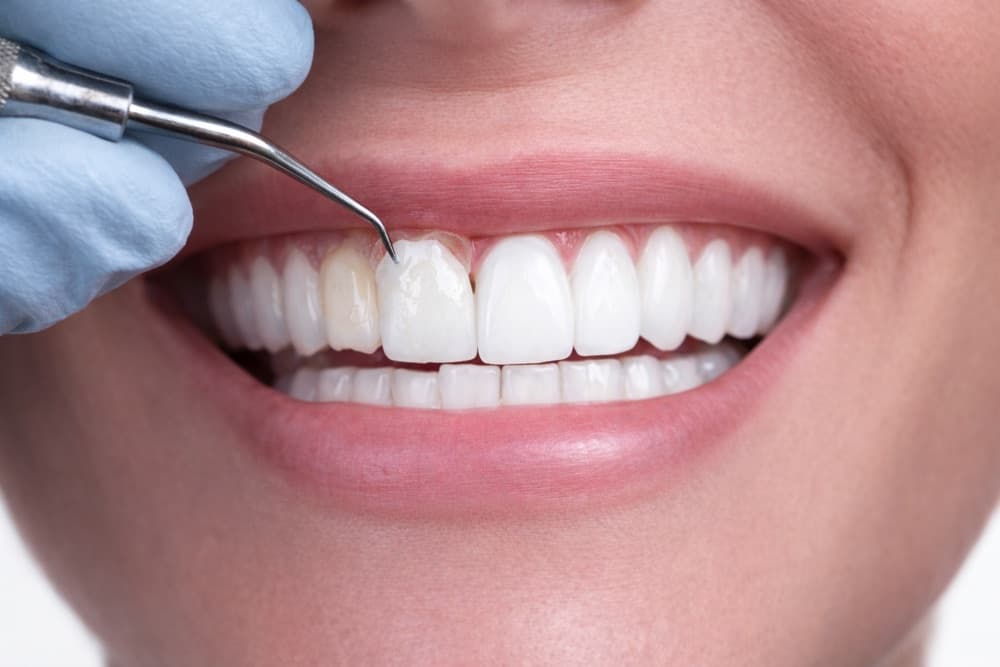
An adhesive, tooth-coloured material applied in layers to repair certain cavities, fractures or defects in shape.
- Duration
- About 30 to 90 minutes per tooth, sometimes more depending on the extent
- Recovery
- Immediate return to activities; transient sensitivity possible
Price and stay
Composite Dental Restoration (per unit)
from€130per toothBase price
- Hotel
- Hotel not includedFor treatments over €10,000, one week of hotel accommodation is complimentary on the first stay.
Included
- anaesthesia
Not included
- flights
- medication
- hotel
- transfers
Base price shown as a guide: your personalised quote, drawn up after assessment, is the one that applies.
Get a personalized quoteGoals and benefits
Dental composite: indications, limits, maintenance and alternatives
Dental composite is a tooth-coloured restorative material made of a resin and mineral particles. It is applied directly to the tooth and then hardened with a curing light.
The benefits
- Shade and shape adapted to the treated tooth
- Direct solution for many small to medium restorations
- Preservation of healthy tooth tissue when the indication allows it
- Often completed in a single session
- Polishable and often repairable material
- Can restore a broken, chipped or slightly worn tooth
- Conservative alternative for limited defects
- Longevity varying with size, occlusion and maintenance
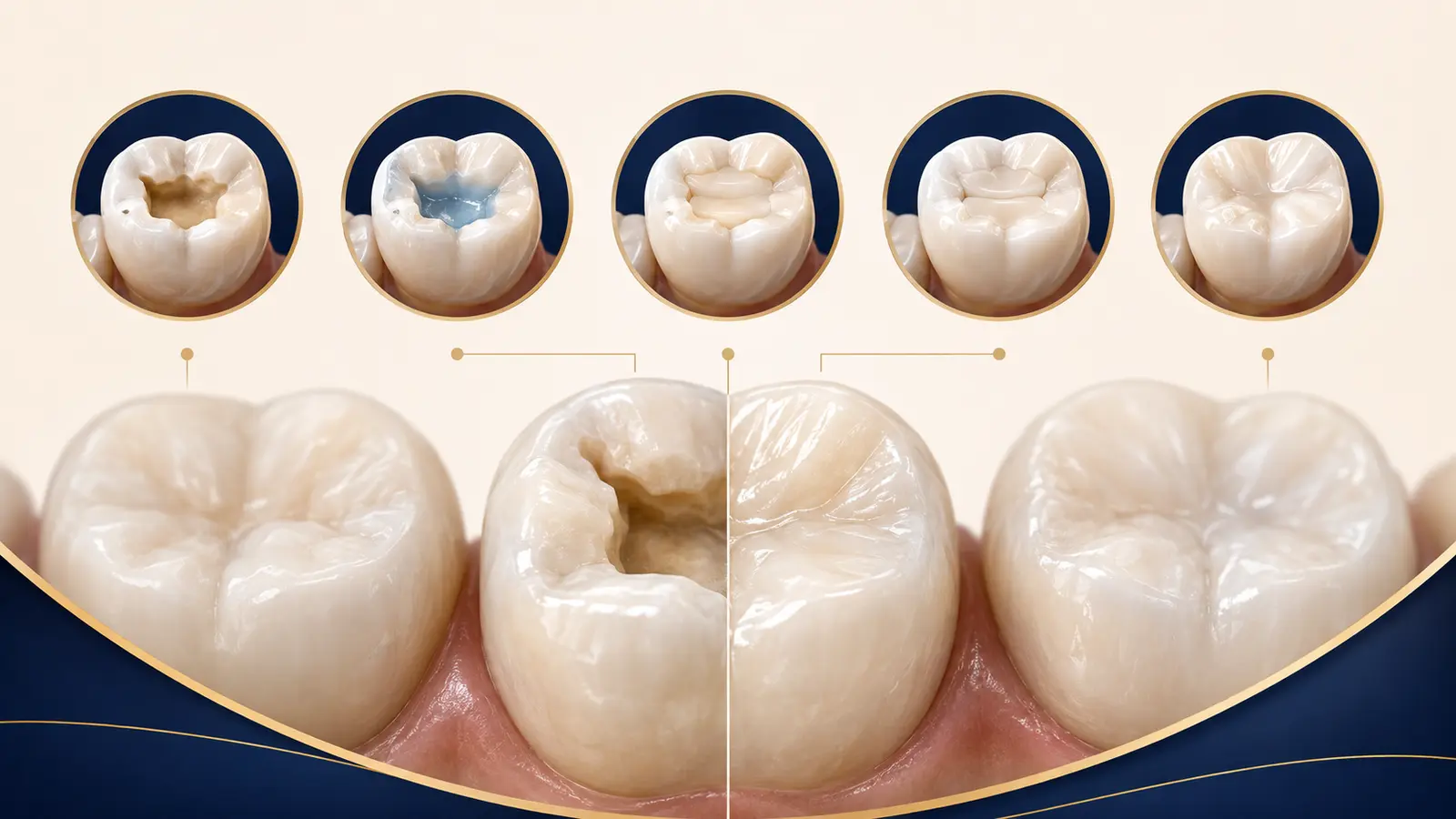
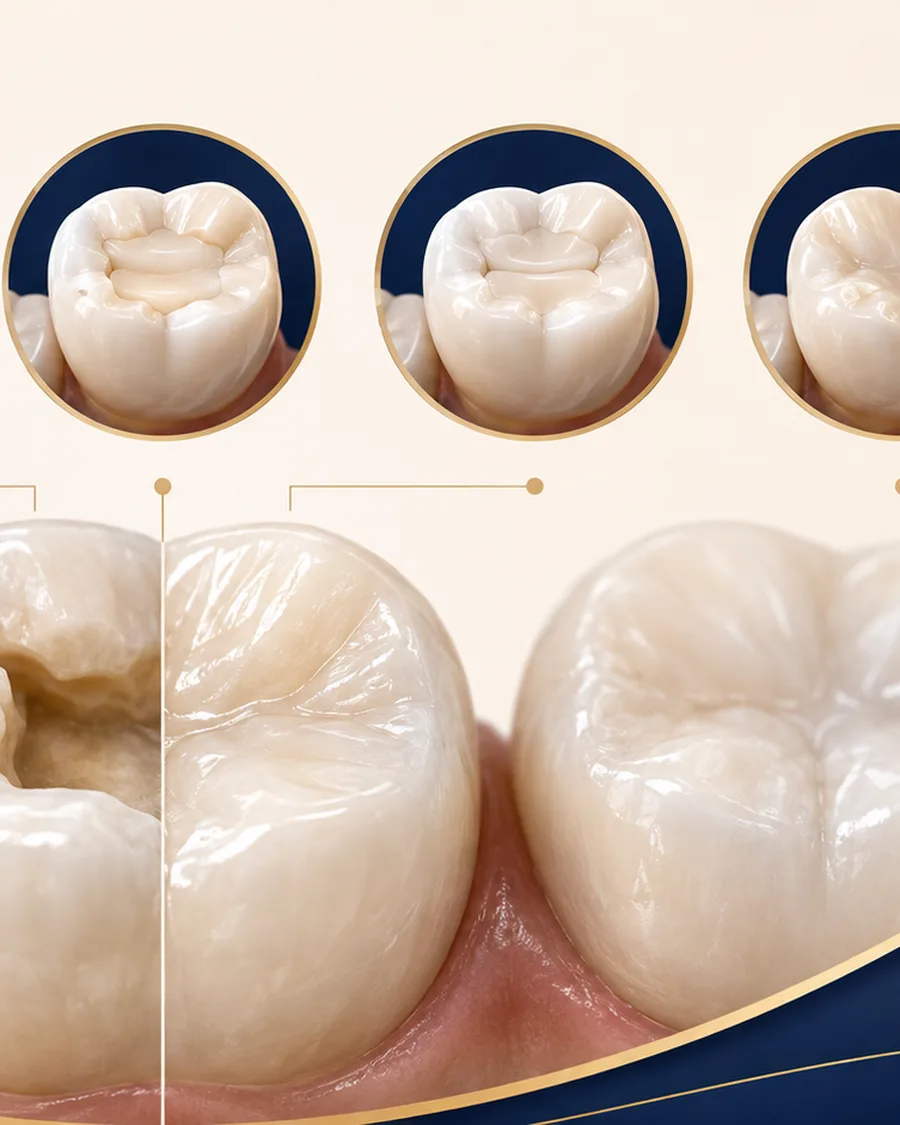
Rebuilding the tooth layer by layer
After cleaning and isolation, the adhesive and then the composite are applied and cured. The final shaping restores the contours, the contacts and the occlusion.
- Maximum preservation of healthy tissue
- Shades and opacities combined
- Repair possible in certain situations
What the practitioner assesses
Whether the tooth can be isolated from moisture
Contacts, occlusion, bruxism and aesthetic requirements
Treatment video
Educational animation of the main treatment stages. The actual protocol is adapted to each patient's diagnosis.
Procedure
The treatment process
Diagnosis and choice of the restoration
Clinical examination, with X-rays if necessary, to look for decay, cracks, pulp involvement and the amount of remaining tooth. Composite is compared with alternatives such as an inlay-onlay, a crown or root canal treatment.
Cleaning, isolation and conservative preparation
Decay and weakened tissue are removed while preserving as much healthy tooth as possible. The area is isolated from saliva and moisture to promote reliable bonding.
Bonding and layering of the composite
An adhesive protocol is applied, then the composite is placed in successive layers. The shade, opacity and shape are adapted to the treated tooth.
Light-curing, sculpting and polishing
Each layer is hardened with a curing light. The restoration is then sculpted, polished and adjusted to restore contacts and a surface compatible with chewing.
Occlusion check and follow-up
The practitioner checks the contacts with neighbouring teeth and the bite. Persistent pain, a feeling of excess height or significant sensitivity must be reported. Check-ups allow the restoration to be polished, repaired or replaced if necessary.
Technology and materials
Adhesives, layering and light curing
The bonding protocol, the quality of the isolation and the curing all influence the restoration. Very extensive cavities may require an indirect restoration.
Safety
Contraindications
- Deep decay, spontaneous pain or pulp involvement that may require root canal treatment
- Deep crack or overly weakened tooth that may call for an onlay, a crown or an extraction
Frequently asked questions
Does composite change colour?
It can become stained or lose its gloss over time depending on habits, on maintenance and on the surface. Polishing or a repair can sometimes improve it.
Can a composite be repaired without redoing it entirely?
In certain situations, a localised repair is possible after checking the restoration and the cause of the defect.
Related treatments
Request your quote
Ready to transform your smile?
Send us your panoramic X-rays and photos to receive a free assessment and a detailed treatment plan within 24 hours.
Free consultation within 24h
Updated on