
Dimensions of the defect and quality of the remaining bone
Rebuilding bone volume
Synthetic dental bone graft
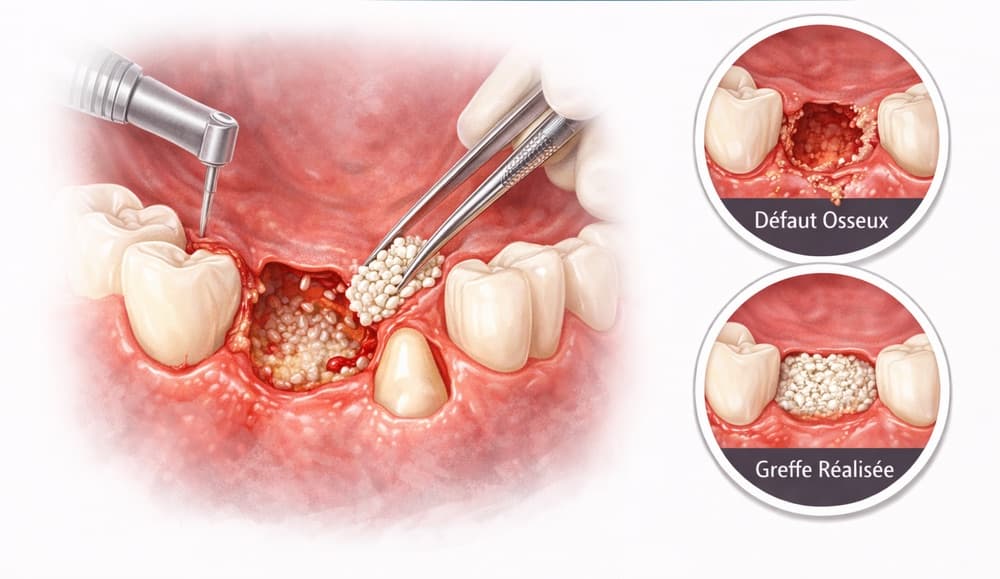
A biomaterial helps to maintain or rebuild bone volume when an implant or a restoration requires more support.
- Duration
- Variable surgery time; healing generally takes several months
- Recovery
- Swelling, pain, bruising and discomfort possible for several days
Price and stay
Synthetic Bone Graft
€350Base price
- Hotel
- Hotel not includedFor treatments over €10,000, one week of hotel accommodation is complimentary on the first stay.
Included
- anaesthesia
- post-operative follow-up
Not included
- flights
- medication
- hotel
- transfers
Base price shown as a guide: your personalised quote, drawn up after assessment, is the one that applies.
Get a personalized quoteGoals and benefits
Dental bone grafting: materials, steps, healing and risks
After an extraction, periodontal disease, trauma or a long period without a tooth, the jawbone can lose height or thickness.
The benefits
- Increase of the bone volume when the bone is insufficient
- Possibility of preparing bone support for a future implant
- Choice of the biomaterial according to the defect and the implant project
- Can avoid harvesting bone from another site when the substitute is suitable
- Can make a more favourable implant position possible
- Can improve the bone support of the future implant
- 3D planning of the reconstruction and of the future implant position
- Traceability of the biomaterial and the membrane used
Creating a protected space for regeneration
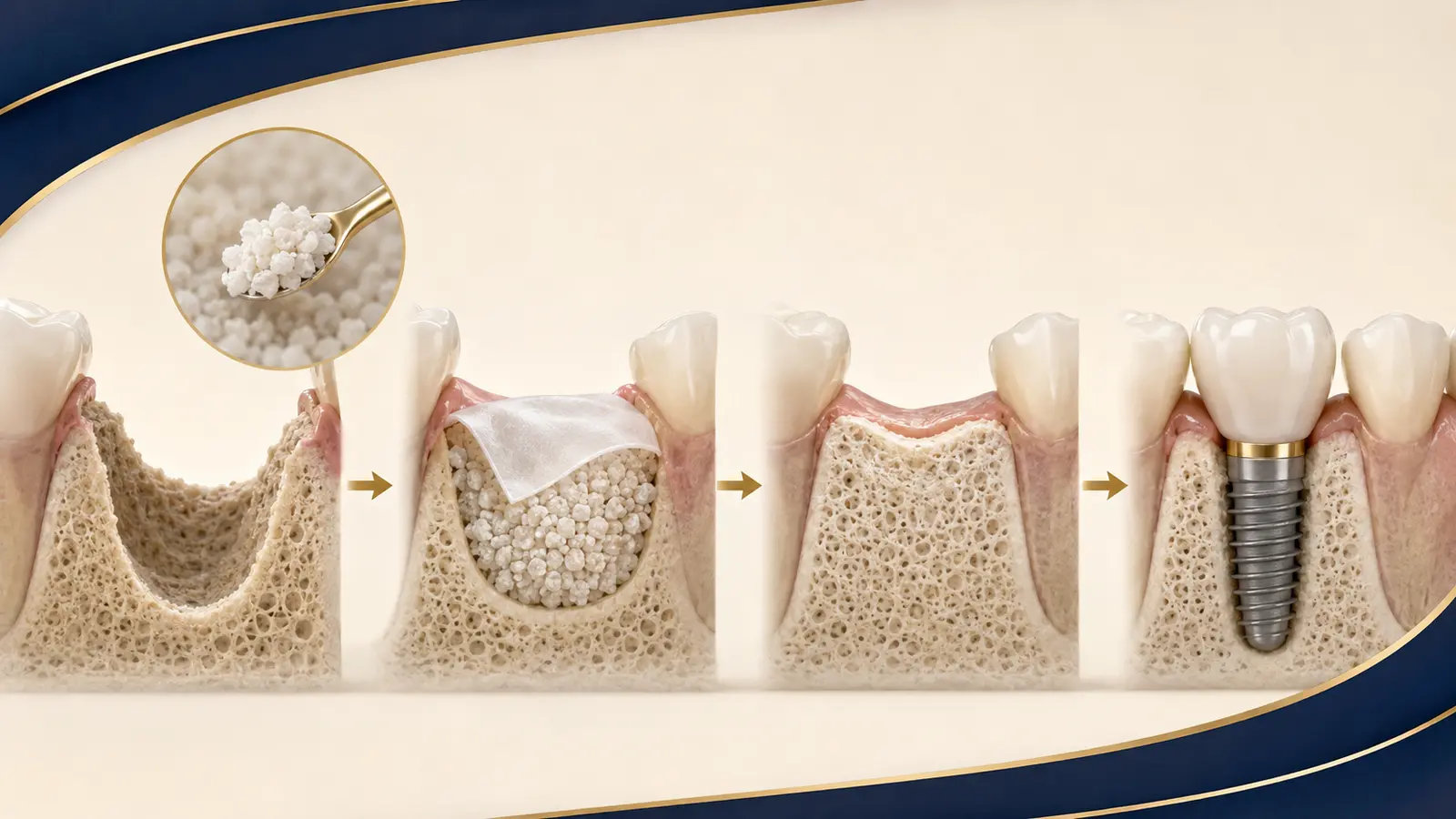
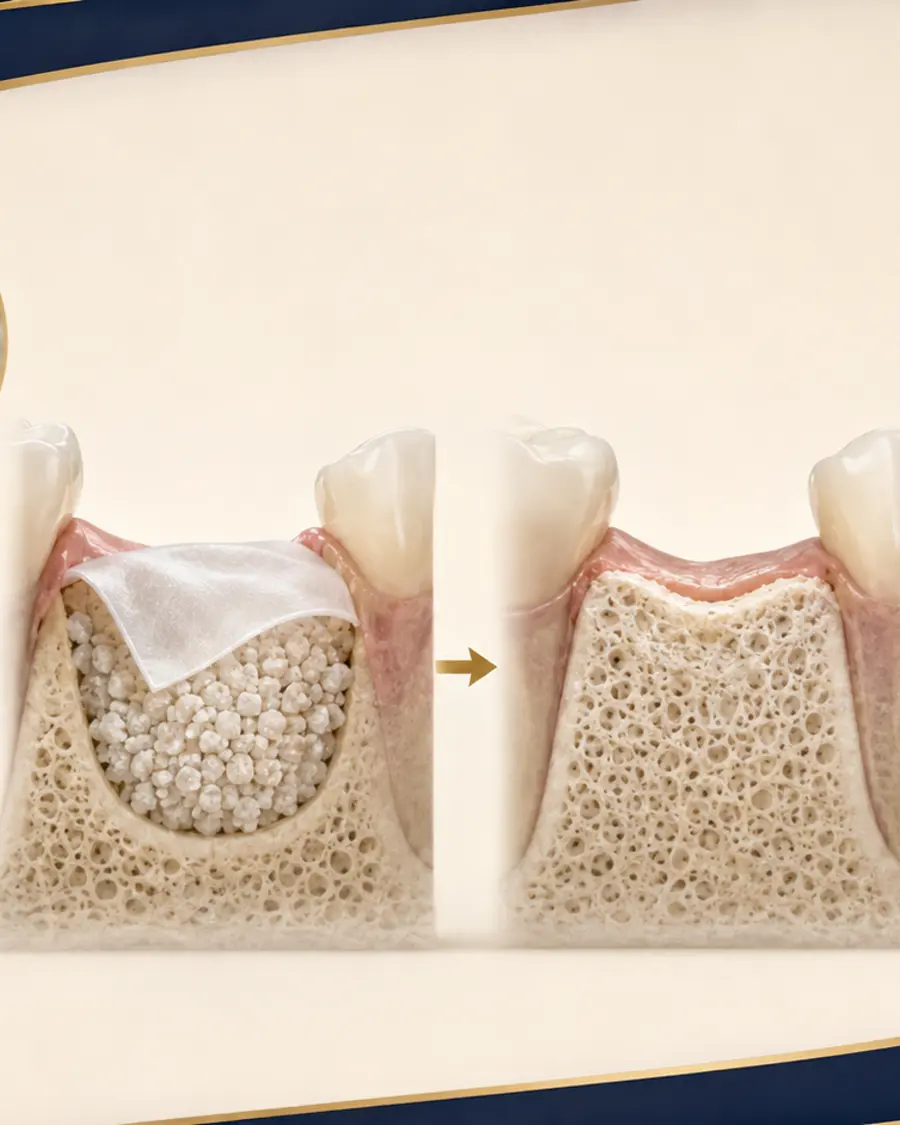
The biomaterial is placed in the defect and may be covered with a membrane. As healing progresses, the aim is to obtain a volume that is stable enough for the planned treatment.
- Technique chosen according to the shape of the defect
- Membrane and biomaterial suited to the site
- Check-ups before any implant stage
What the practitioner assesses
Condition of the gum and possible closure of the site
Smoking, infection, medication and healing capacity
Treatment video
Educational animation of the main treatment stages. The actual protocol is adapted to each patient's diagnosis.
Procedure
The treatment process
Clinical assessment and 3D scan
Examination of the teeth and gums, cone beam scan, measurement of the bone defect, search for infection and study of the implant project. Medical factors, tobacco and medications are also evaluated.
Choice of the technique and biomaterials
The practitioner chooses between a graft performed together with the implant or a two-stage reconstruction. The type of biomaterial, the membrane, the fixation and the expected healing time are specified.
Placement of the graft and the membrane
The biomaterial is placed and stabilised in the deficient area. A membrane can be used to protect the site and guide bone regeneration. The origin and references of the materials are documented.
Healing and bone formation
The site is left to heal for several months. The duration depends on the reconstructed volume, the material, the area and the biological response. Clinical and radiological check-ups assess the consolidation.
Consolidation check and implant placement
Once consolidation is judged sufficient, the implant can be placed or the prosthetic phase can continue. Additional bone volume or an adaptation of the plan can sometimes remain necessary.
Technology and materials
Biomaterials and regeneration membranes
Bone substitutes have different properties and indications. Their selection, as well as the healing time, depends on the defect and on the surgical protocol.
Safety
Contraindications
- Oral infection or active periodontal disease to treat before the graft
- Uncontrolled diabetes or unstabilised general condition
- Smoking, which increases the risk of delayed healing and complications
Frequently asked questions
Is a bone graft always necessary before an implant?
No. It is proposed only when the volume or the shape of the bone does not allow the implant plan to be carried out in satisfactory conditions.
Can the implant be placed at the same time?
Sometimes, if the stability and the remaining volume are sufficient. Otherwise, separate healing is preferable.
Related treatments
Request your quote
Ready to transform your smile?
Send us your panoramic X-rays and photos to receive a free assessment and a detailed treatment plan within 24 hours.
Free consultation within 24h
Updated on