
Pocket depth, bleeding and tooth mobility
Periodontal access and debridement
Periodontal flap surgery
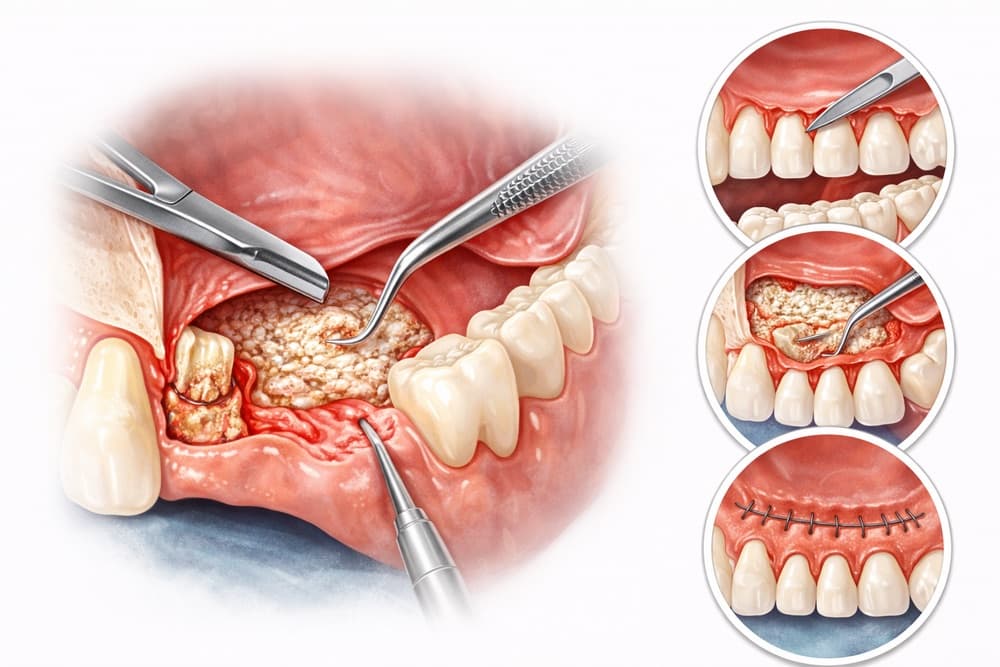
A procedure intended to access the roots and the bone when non-surgical treatment is not enough to control certain periodontal pockets.
- Duration
- 60 to 180 minutes depending on the number of teeth and associated procedure
- Recovery
- Pain, swelling, sensitivity or discomfort possible for several days
Price and stay
Periodontal Flap Surgery
€800Base price
- Hotel
- Hotel not includedFor treatments over €10,000, one week of hotel accommodation is complimentary on the first stay.
Included
- anaesthesia
- post-operative follow-up
Not included
- flights
- medication
- hotel
- transfers
Base price shown as a guide: your personalised quote, drawn up after assessment, is the one that applies.
Get a personalized quoteGoals and benefits
Periodontal flap surgery
Periodontal flap surgery, also called open flap debridement or access surgery, treats certain areas of periodontal disease that remain difficult to clean despite thorough non-surgical treatment.
The benefits
- Direct access to roots and bone defects that are difficult to clean
- Some affected teeth can be kept when the prognosis remains favourable
- Possible reduction of certain persistent periodontal pockets
- Area potentially easier to maintain after healing
- Regeneration possible only in certain favourable defects
- Plan adapted to the severity of the disease and the bone anatomy
- Treatment combined with personalised periodontal maintenance
- Prognosis strongly dependent on hygiene and smoking
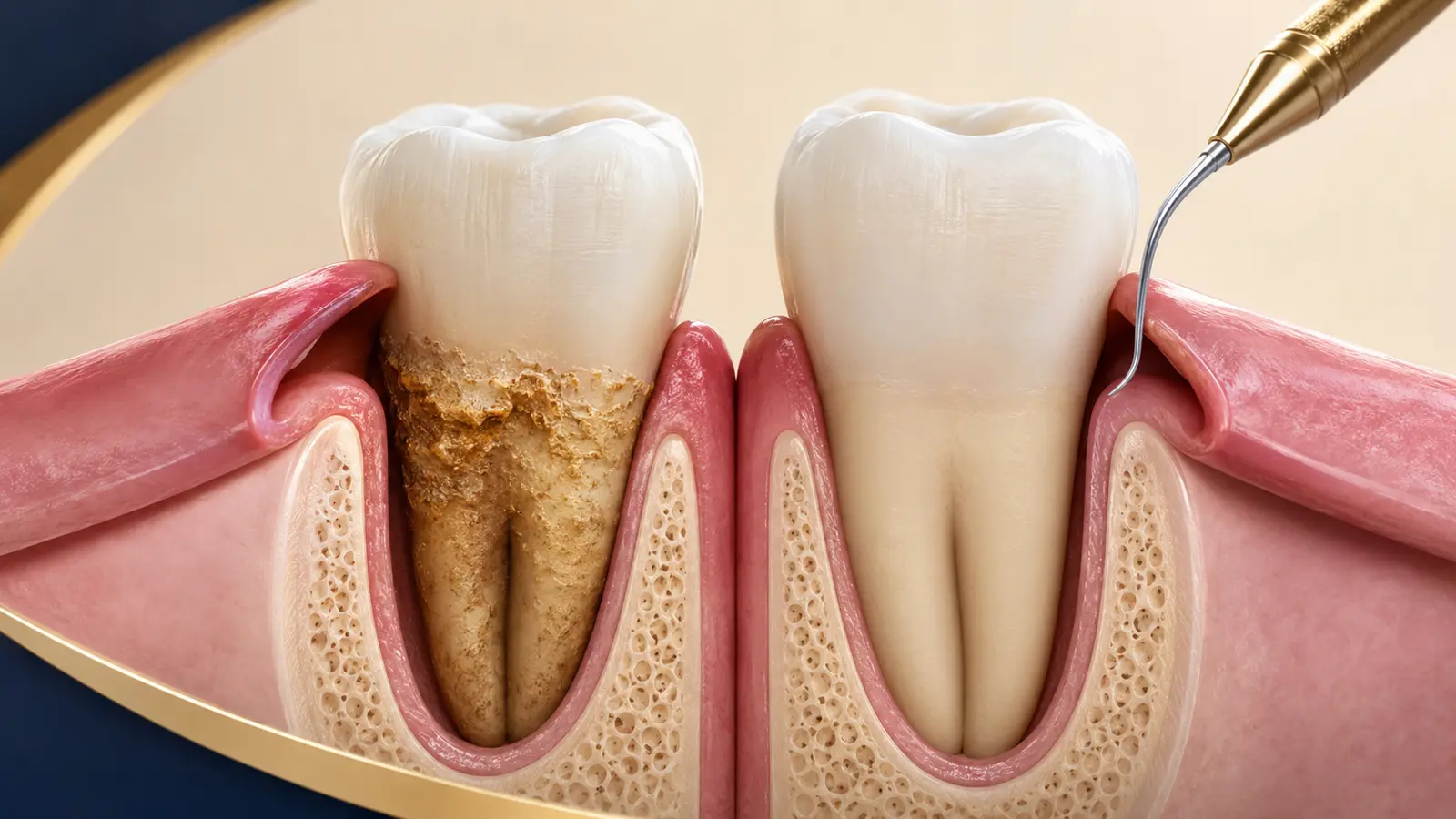
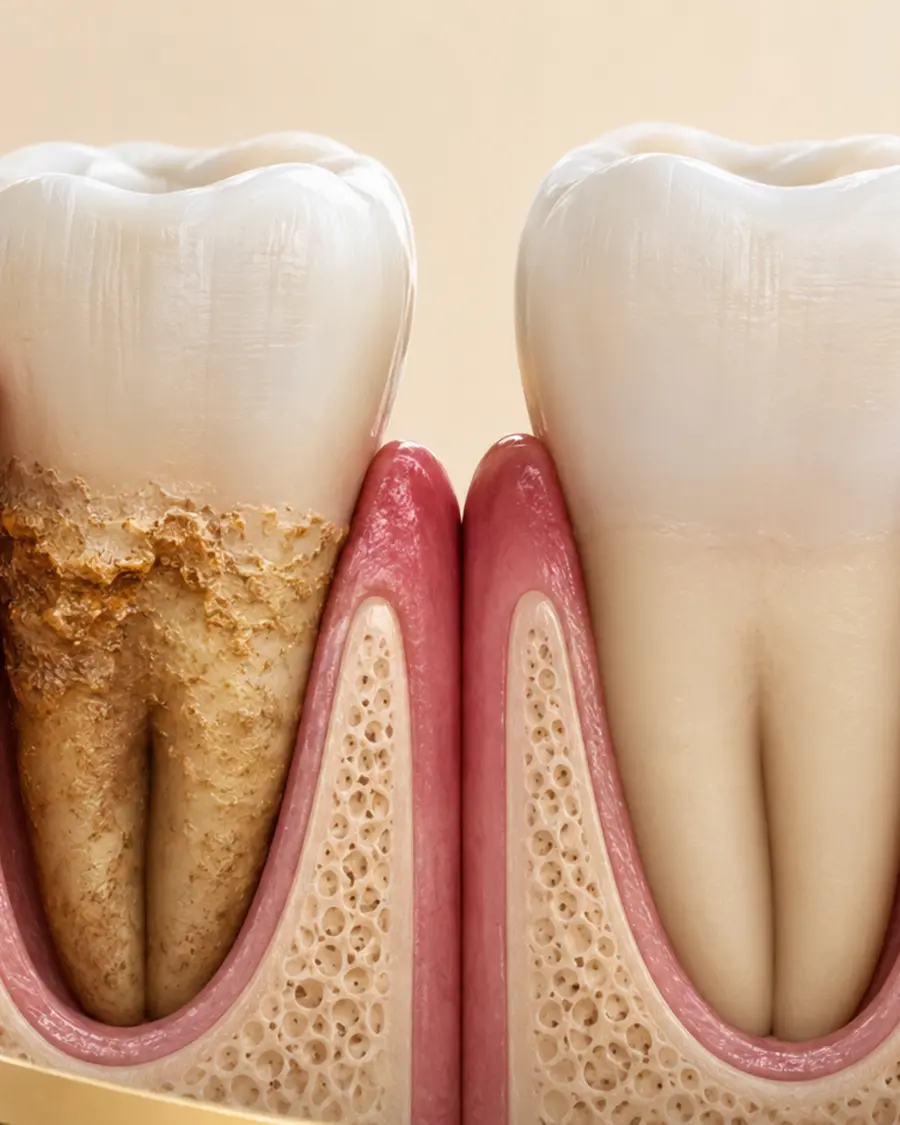
Deep cleaning under direct vision
The flap gives access to the deposits and to the bone defects. The roots are cleaned, then the tissues are repositioned. A regenerative procedure may be combined with it in selected situations.
- Indicated after reassessment of the initial treatment
- Direct access to the roots and to the defects
- Periodontal maintenance essential after healing
What the practitioner assesses
Shape and extent of the bone loss
Hygiene, smoking, diabetes and response to the initial treatment
Treatment video
Educational animation of the main treatment stages. The actual protocol is adapted to each patient's diagnosis.
Procedure
The treatment process
Initial treatment and periodontal reassessment
Scaling and root planing, learning interdental cleaning, then reassessment of pockets, bleeding, mobility and bone level. Imaging is chosen according to the area to be treated.
Anaesthesia and surgical access
Under local anaesthesia, an incision allows the gum to be gently lifted to access the roots and the bone in the area concerned.
Debridement and root cleaning
Tartar, plaque and inflammatory tissue are removed. The root surfaces are cleaned and the bone architecture can be reshaped when it prevents proper maintenance.
Possible regeneration and sutures
A biomaterial, a membrane or a regenerative product may be added only when the defect is suitable. The gum is then repositioned and held in place with sutures.
Healing and periodontal maintenance
Sutures are checked or removed after one to two weeks. Cleaning resumes gradually according to the instructions. Regular check-ups and maintenance sessions are essential to preserve the result.
Technology and materials
Periodontal measurements and targeted imaging
Probing, X-rays and photographs make it possible to compare how the situation changes. The outcome also depends on plaque control and on the risk factors.
Safety
Contraindications
- Non-surgical treatment and improved hygiene generally required before surgery
- Persistent deep periodontal pockets, bleeding or inflammation confirmed at reassessment
Frequently asked questions
Does this surgery cure periodontitis definitively?
It can help to control the disease in the areas concerned, but periodontitis requires regular maintenance and long-term management of the risk factors.
Can the gums recede?
Recession or more visible gaps may appear after the inflammation has been reduced and after surgery. This point is explained before treatment.
Related treatments
Request your quote
Ready to transform your smile?
Send us your panoramic X-rays and photos to receive a free assessment and a detailed treatment plan within 24 hours.
Free consultation within 24h
Updated on