
Quantity and quality of the available enamel
Ultra-thin ceramic
Dental veneers
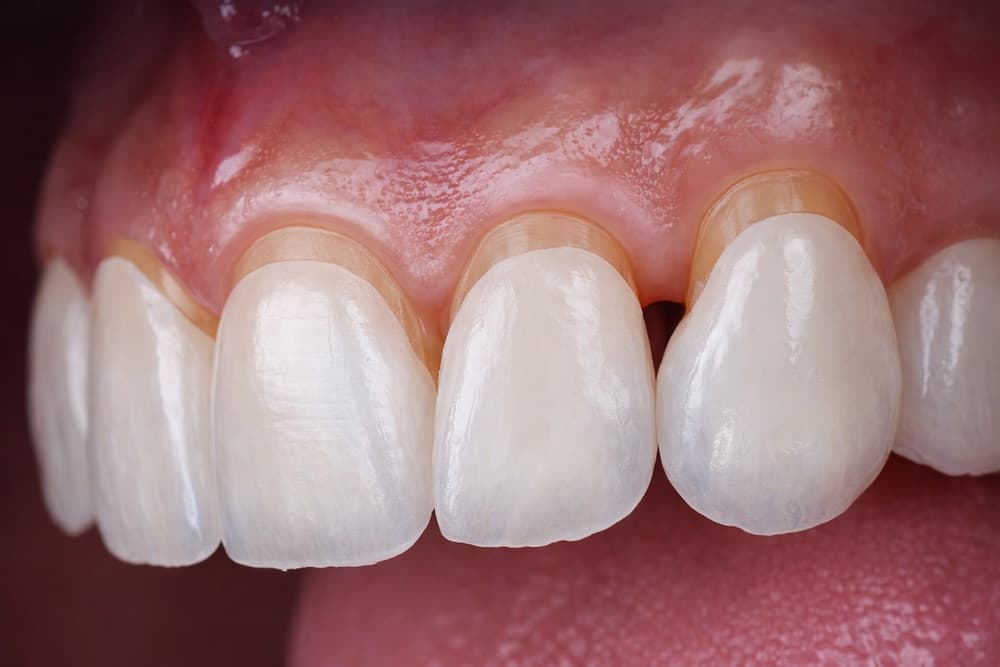
A thin restoration used, when it is indicated, to modify the shape, the shade or certain proportions of the front teeth.
- Duration
- Usually 2 to 3 appointments spread over several days
- Recovery
- Immediate return to daily activities; transient sensitivity or discomfort possible
Price and stay
Dental Veneer (per unit)
from€250per unitBase price
- Hotel
- Hotel not includedFor treatments over €10,000, one week of hotel accommodation is complimentary on the first stay.
Included
- anaesthesia
- post-operative follow-up
Not included
- flights
- medication
- hotel
- transfers
Base price shown as a guide: your personalised quote, drawn up after assessment, is the one that applies.
Get a personalized quoteGoals and benefits
Dental veneers
Dental veneers are thin restorations, most often in ceramic, bonded to the visible surface of the front teeth. They can improve the shape, shade, proportions or certain slight irregularities of the smile.
The benefits
- Personalised modification of the shape and shade of the visible teeth
- Ceramics resistant to staining depending on the material and the maintenance
- Natural appearance achieved through the choice of shade and translucency
- Mock-up possible before the final preparation
- Maximum preservation of the enamel whenever the situation allows
- Longevity depending on the bonding, the occlusion and the maintenance
- Correction of several aesthetic parameters within a single project
- Custom manufacturing by a dental prosthetics laboratory
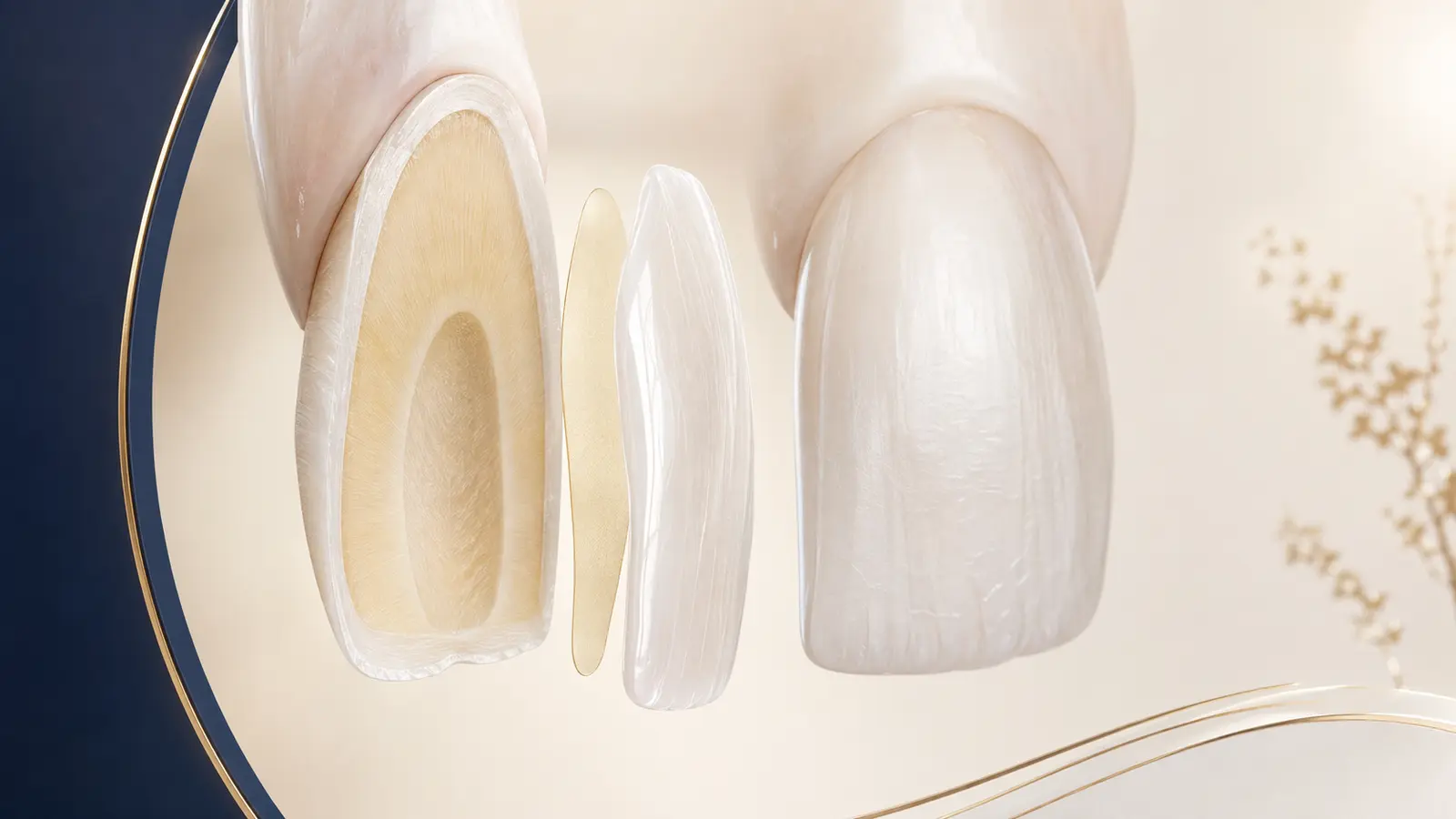
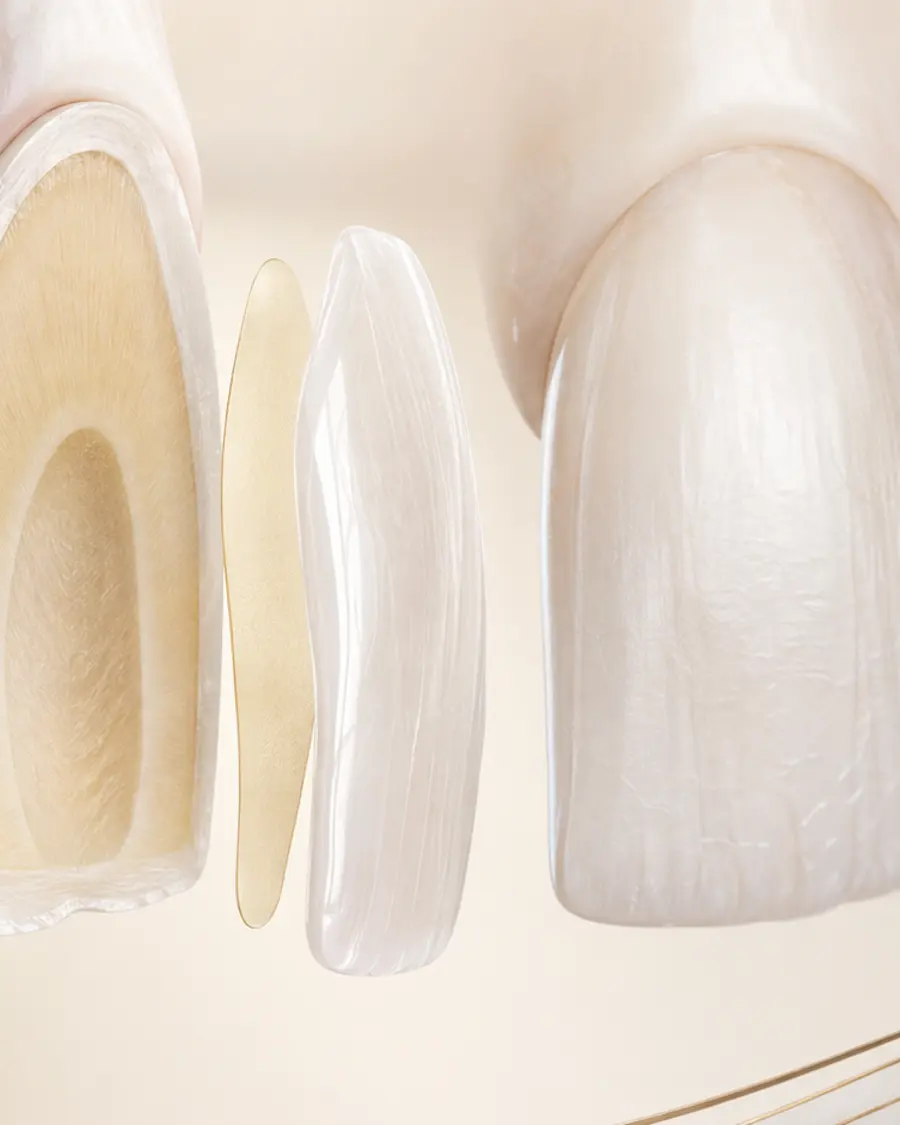
A thin layer of ceramic bonded to the enamel
The veneer covers the visible surface of the tooth. Its stability depends on rigorous bonding, a sufficient amount of enamel and a compatible occlusion.
- Preparation kept as conservative as possible
- Translucent ceramic matched to the neighbouring teeth
- Precise control of the shape, the bonding and the occlusion
What the practitioner assesses
Position of the teeth and constraints of the occlusion
Bruxism, hygiene, gums and aesthetic expectations
Treatment video
Educational animation of the main treatment stages. The actual protocol is adapted to each patient's diagnosis.
Procedure
The treatment process
Aesthetic and functional assessment
Examination of the teeth and gums, photographs, impressions, analysis of the enamel, the shade, the occlusion and bruxism. Alternatives such as whitening, composite or orthodontics are compared.
Digital project and mock-up try-in
An aesthetic mock-up can be tried on the teeth to evaluate volumes, proportions, phonetics and integration into the smile before any definitive preparation.
Conservative preparation and impression
When necessary, an adapted amount of enamel is removed under local anaesthesia to create space for the ceramic. The preparation varies for each tooth; a precise impression and a shade record are then taken.
Custom manufacturing of the veneers
The laboratory manufactures the veneers according to the validated project, the chosen material, the shade, the translucency and the chewing constraints. Temporaries can be used when the preparation requires them.
Try-in, bonding and occlusion check
Shape, shade and fit are checked before adhesive bonding. The occlusion is adjusted and advice is given about cleaning, very hard foods and protection against bruxism.
Technology and materials
Trial mock-up, digital impression and custom-made ceramic
The trial mock-up makes it possible to discuss volume and proportions before the final work. The laboratory then translates the project into ceramic.
Safety
Contraindications
- Cavities, infection or active gum disease to treat before the aesthetic project
- Insufficient enamel or a heavily restored tooth making bonding less predictable
- Significant misalignment better addressed by orthodontics
Frequently asked questions
Do the teeth always have to be prepared?
Some preparation may be necessary, but its extent depends on the position, the shape and the shade of the teeth. Cases without preparation are limited and must be selected.
Are veneers suitable in cases of bruxism?
Bruxism increases the loads involved. An analysis of the occlusion and sometimes a night guard are necessary; in some cases another solution is preferable.
Related treatments
Request your quote
Ready to transform your smile?
Send us your panoramic X-rays and photos to receive a free assessment and a detailed treatment plan within 24 hours.
Free consultation within 24h
Updated on