
Cause of the excess gum tissue and presence of inflammation
Gingival architecture
Gingivectomy
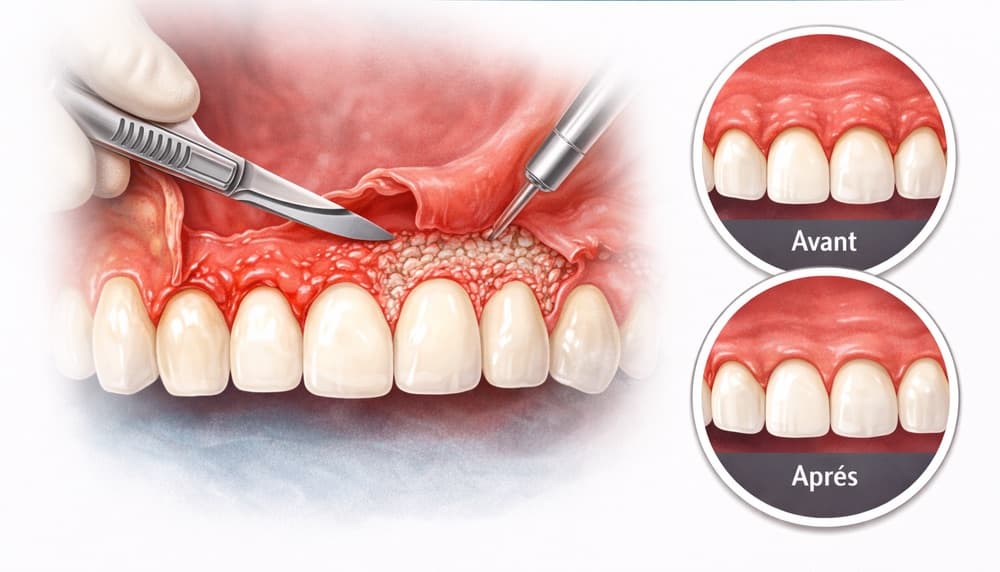
A reshaping of the gum intended to treat an excess of tissue or to rebalance the gum line after diagnosis.
- Recovery
- Discomfort, sensitivity and slight bleeding possible for several days
Price and stay
Gingivectomy
€700Base price
- Hotel
- Hotel not includedFor treatments over €10,000, one week of hotel accommodation is complimentary on the first stay.
Included
- anaesthesia
- post-operative follow-up
Not included
- flights
- medication
- hotel
- transfers
Base price shown as a guide: your personalised quote, drawn up after assessment, is the one that applies.
Get a personalized quoteGoals and benefits
Gingivectomy
Gingivectomy consists of removing part of the gum when it is in excess.
The benefits
- Targeted removal of excess gum after a periodontal diagnosis
- Gum contour planned according to the teeth, the bone and the smile line
- Planning based on bone height and gum thickness
- Can improve the gum contour when the indication is correctly established
- Can make cleaning easier when excess gum creates false pockets
- Can prepare a restoration only once the tissues are stabilised
- Scalpel, electrosurgery or laser chosen according to the case
- Follow-up essential to limit recurrence
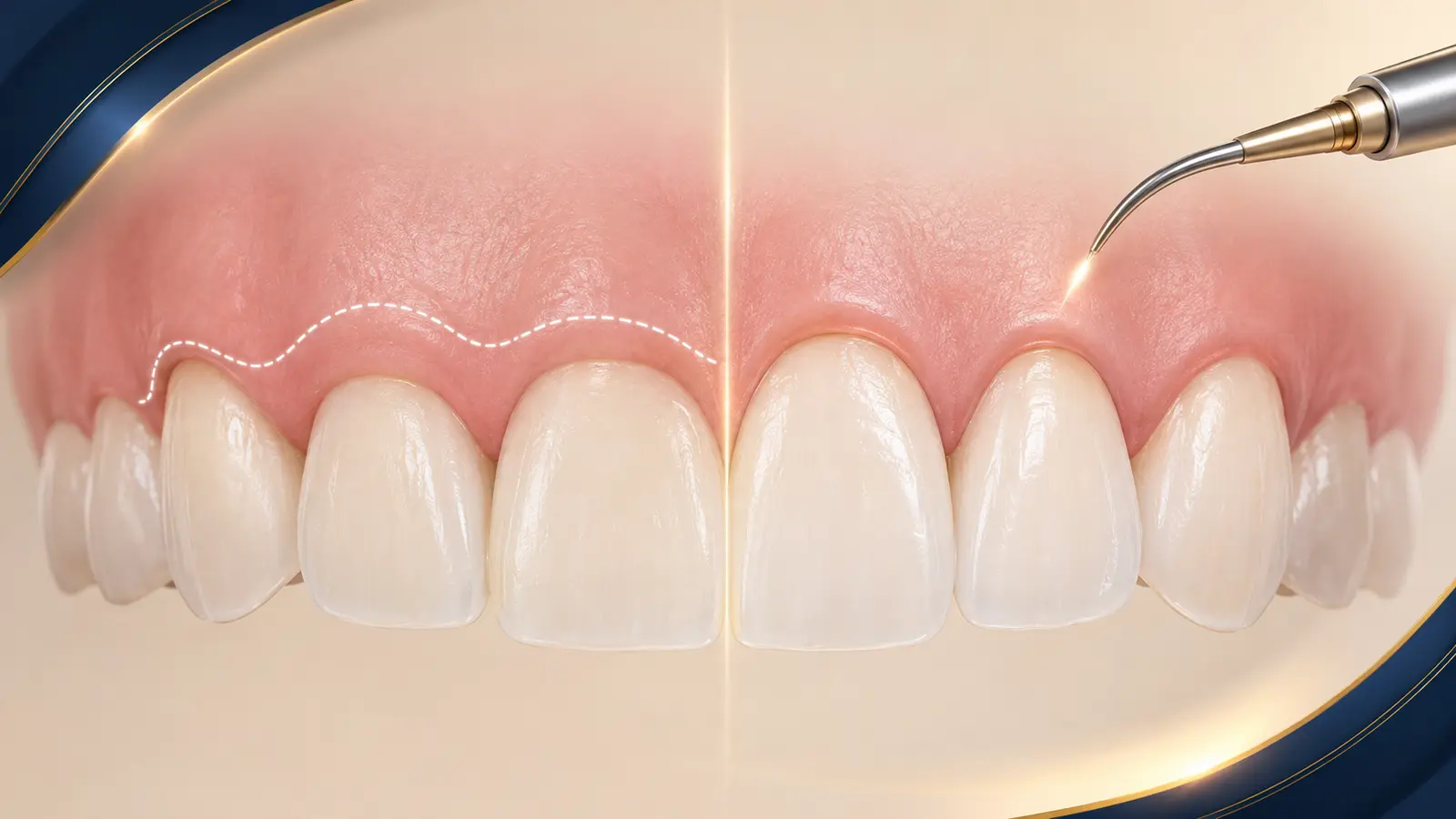
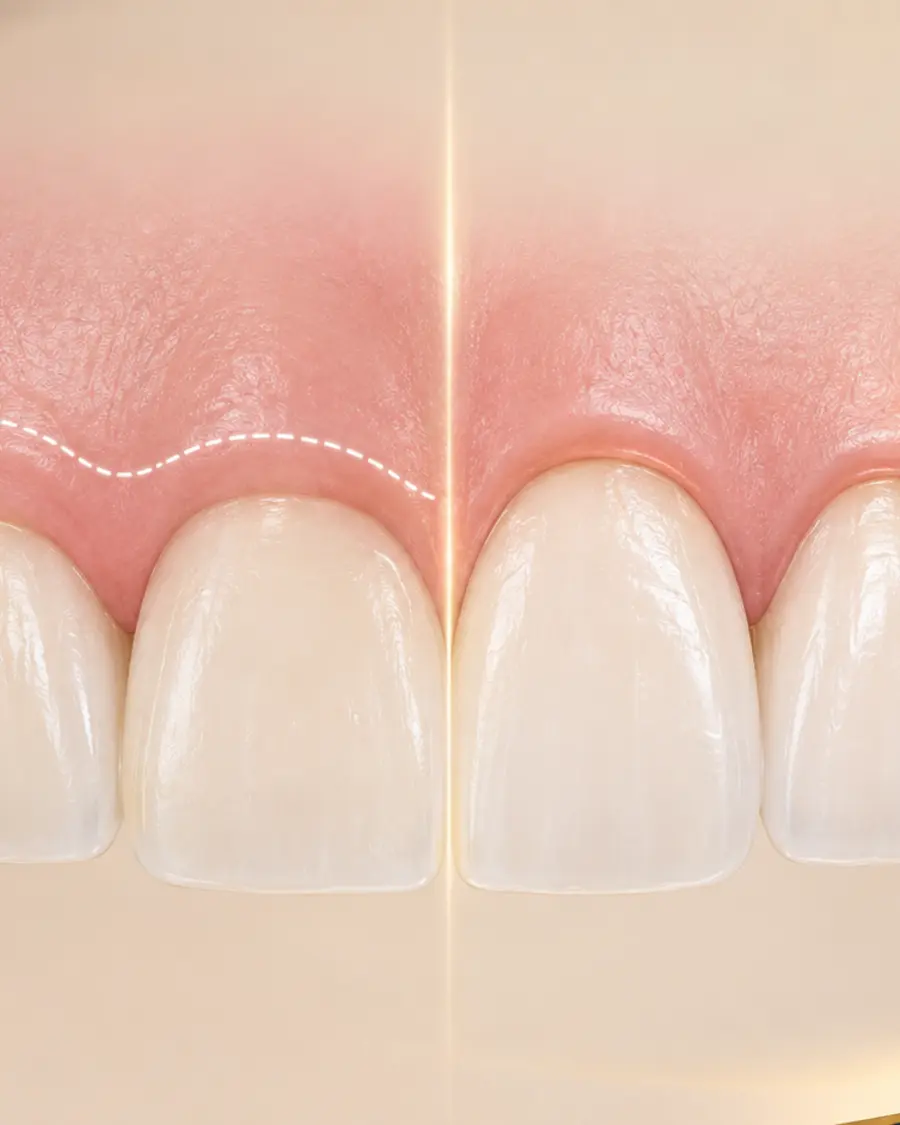
Redrawing the gum line with precision
The intended contour is planned according to the height of the teeth, the bone level and periodontal health. A gingivectomy is not indicated for every form of gummy smile.
- Symmetrical planning of the contour
- Respect for the attachment tissues (biological width) and the bone level
- Healing monitored before any final restoration
What the practitioner assesses
Relationship between gum, bone and the clinical length of the teeth
Hygiene, smile, symmetry and the associated restorative project
Treatment video
Educational animation of the main treatment stages. The actual protocol is adapted to each patient's diagnosis.
Procedure
The treatment process
Gum diagnosis and search for the cause
Examination of the gums, pocket measurement, X-rays if needed, assessment of bone height, hygiene, medications and the cause of the gum excess.
Inflammation control and treatment plan
A professional cleaning or non-surgical periodontal treatment may be carried out before the procedure. Aesthetic restorations are planned only after the tissues have stabilised.
Removal and reshaping of the excess gum
The amount of tissue to be removed is marked, then the gum is reshaped with a scalpel, by electrosurgery or with a laser depending on the indication. A periodontal dressing may be placed in some cases.
Bleeding control and protection of the area
Bleeding is controlled and the treated surface is protected according to the technique used. Cleaning instructions and, if necessary, an antiseptic mouthwash are specified.
Healing, resumption of brushing and check-up
The area is checked after about one to two weeks. Brushing resumes gradually according to the instructions. The final contour and the need for a restoration are reassessed after the tissues have stabilised.
Technology and materials
Periodontal probing and aesthetic guide
Clinical measurements, photographs and, depending on the case, a contour guide help to harmonise the result while respecting the tissues.
Safety
Contraindications
- Hygiene and plaque control to be improved before surgery in order to reduce inflammation and the risk of recurrence
- Active periodontal disease to be treated before a purely aesthetic correction
Frequently asked questions
Does the gum grow back after a gingivectomy?
Stability depends on the cause, the technique and maintenance. Persistent inflammation or certain medications may encourage a recurrence.
Is a gingivectomy enough for a gummy smile?
Not always. The cause may be gingival, osseous, dental, muscular or skeletal. Treatment depends on the diagnosis.
Related treatments
Request your quote
Ready to transform your smile?
Send us your panoramic X-rays and photos to receive a free assessment and a detailed treatment plan within 24 hours.
Free consultation within 24h
Updated on