
Volume and shape of the bone and of the supporting tissues
Restoring function and support
Dental prostheses for bone loss
Removable or implant-based solutions suited to the bone volume, the anatomy, the expectations and the ability to maintain them.
Price and stay
Dental Prostheses for Bone Loss
from€8,500Base price
- Stay
- Dental treatment stay
- Hotel
- Hotel not includedFor treatments over €10,000, one week of hotel accommodation is complimentary on the first stay.
Included
- assessment
- prosthesis
Not included
- flights
- medication
- transfers
Base price shown as a guide: your personalised quote, drawn up after assessment, is the one that applies.
Get a personalized quoteGoals and benefits
Complete dentures and bone loss: options, limits, maintenance and risks
Complete tooth loss is often accompanied by progressive resorption of the jawbone. This reduction in bone volume can reduce the stability of a conventional denture and complicate the placement of conventional implants.
The benefits
- Choice between a removable, stabilised or fixed solution depending on the assessment
- Can improve stability, chewing and speech depending on the chosen solution
- Planning adapted to the bone volume and the prosthetic project
- Prosthesis custom-designed for aesthetics, occlusion and phonetics
- All-on-4 or All-on-6 possible when the anatomy allows it
- Bone grafting or graft-free solution discussed according to the CT scan
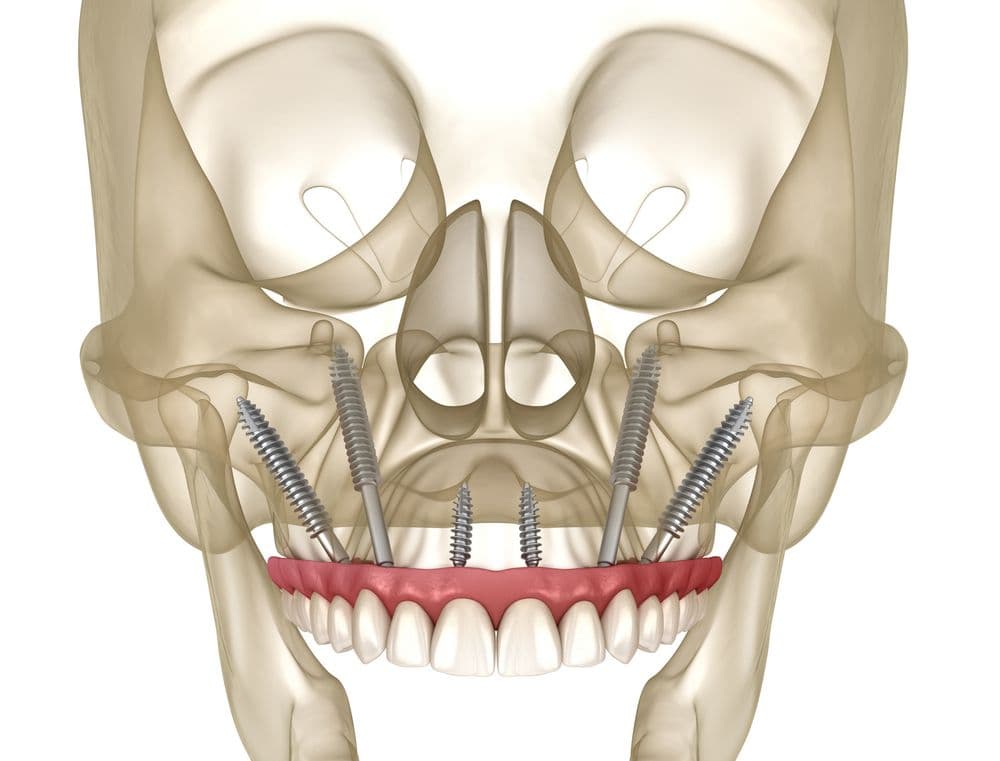
- Zygomatic implants reserved for specialised indications in the upper jaw
- Maintenance, adjustments and repairs included in long-term follow-up
Comparing the options before choosing
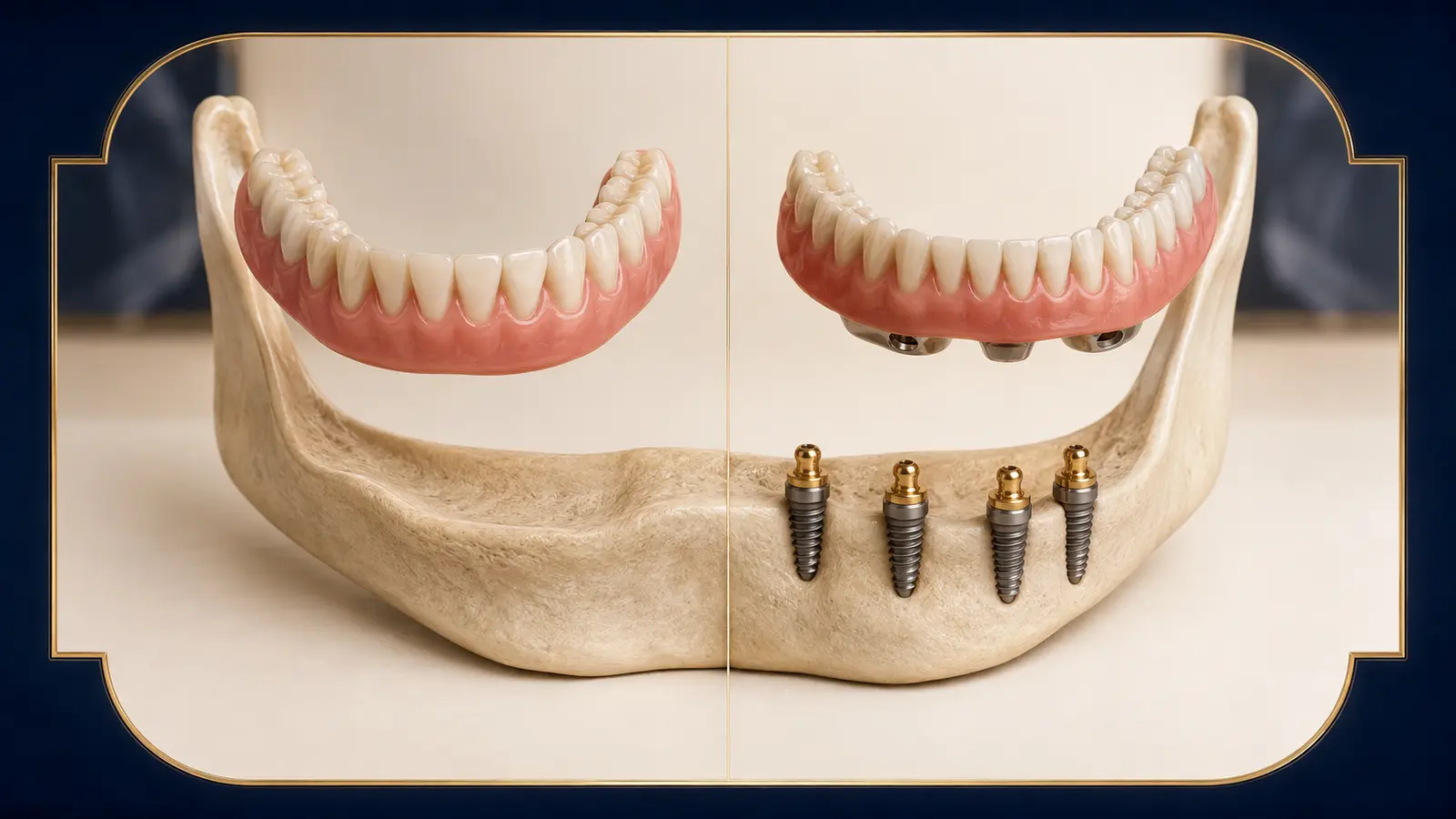
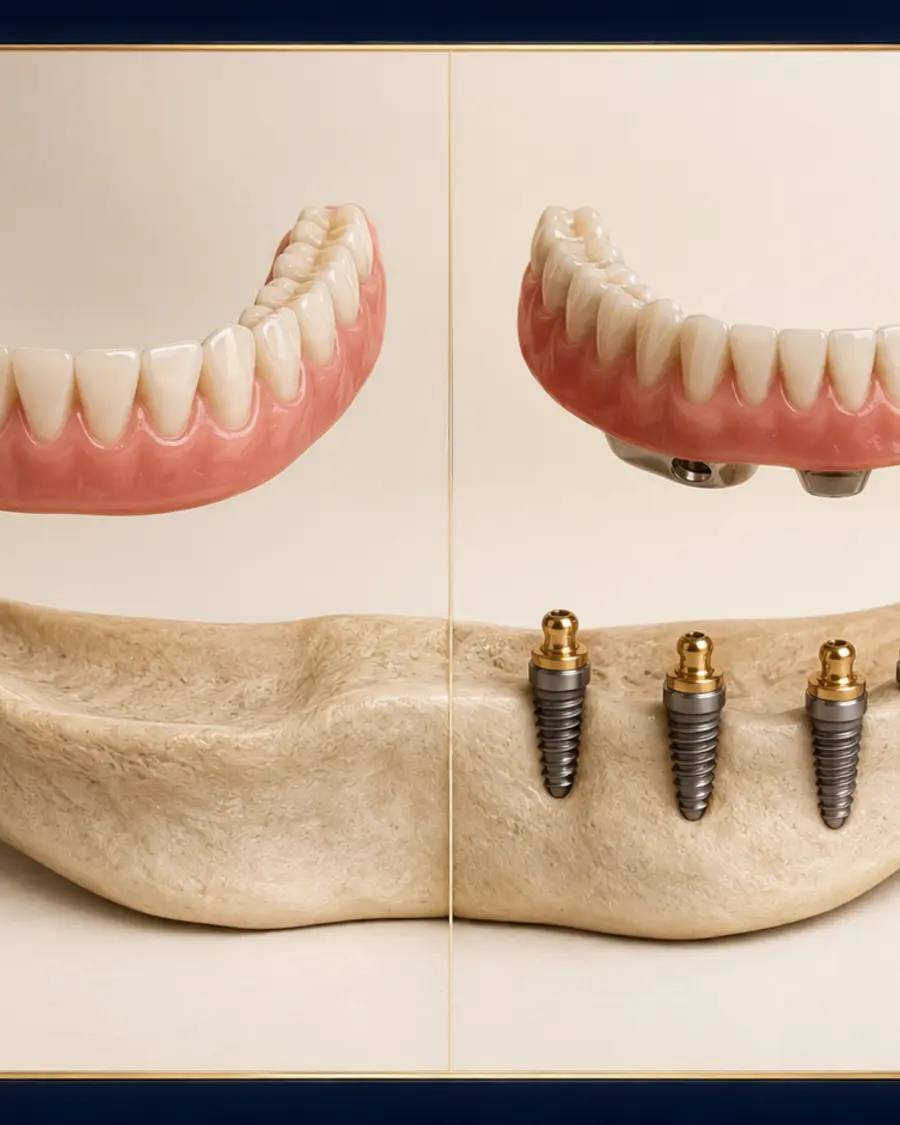
A conventional complete denture rests on the tissues. Implants can improve retention or support a fixed prosthesis, but they require a bone and medical assessment.
- Choice between a removable, stabilised or fixed solution
- Lip support and vertical dimension assessed
- Maintenance and ability to adapt included in the plan
What the practitioner assesses
Smile, speech, chewing and prosthetic space
General health, dexterity, budget and wish for a fixed solution
Treatment video
Educational animation of the main treatment stages. The actual protocol is adapted to each patient's diagnosis.
Procedure
The treatment process
Dental, bone and prosthetic assessment
Examination of the mucosa and gums, cone beam CT scan, study of the sinuses and nerves, analysis of the occlusion, lip support, phonetics and cleaning possibilities.
Comparison of the possible solutions
The plan compares a removable complete denture, an implant-stabilised prosthesis, All-on-4 or All-on-6, bone grafting and, for certain severe atrophies of the upper jaw, zygomatic implants.
Prosthetic preparation or implant surgery
Depending on the chosen solution, impressions and prosthetic try-ins are carried out, or conventional or zygomatic implants are placed under anaesthesia suited to the complexity of the procedure.
Provisional prosthesis and adaptation period
A removable or fixed provisional prosthesis may be used during healing. Rapid fixation of a prosthesis on implants depends on their stability and on chewing constraints.
Final prosthesis and long-term maintenance
After healing and validation of the occlusion, the final prosthesis is made. Follow-up includes professional cleaning, monitoring of the implants and tissues, and any necessary adjustments or repairs.
Technology and materials
Functional impressions and implant planning
Digital design can complement the measurements taken in the mouth. The try-in remains essential in order to validate the aesthetics, the speech and the occlusion.
Safety
Contraindications
- Infection, decay or active periodontal disease to be treated before the prosthetic or implant project
- Uncontrolled diabetes, unstabilised general disease or coagulation disorder requiring individual assessment
Frequently asked questions
Can implants be placed despite bone loss?
That depends on the remaining bone volume, on the anatomy and on general health. A graft, suitable implants or a solution without implants may be discussed.
Does a removable denture remain stable?
Stability depends on the anatomy, on the occlusion and on how well the denture is adapted. Implants can sometimes improve retention.
Related treatments
Request your quote
Ready to transform your smile?
Send us your panoramic X-rays and photos to receive a free assessment and a detailed treatment plan within 24 hours.
Free consultation within 24h
Updated on