
The implant
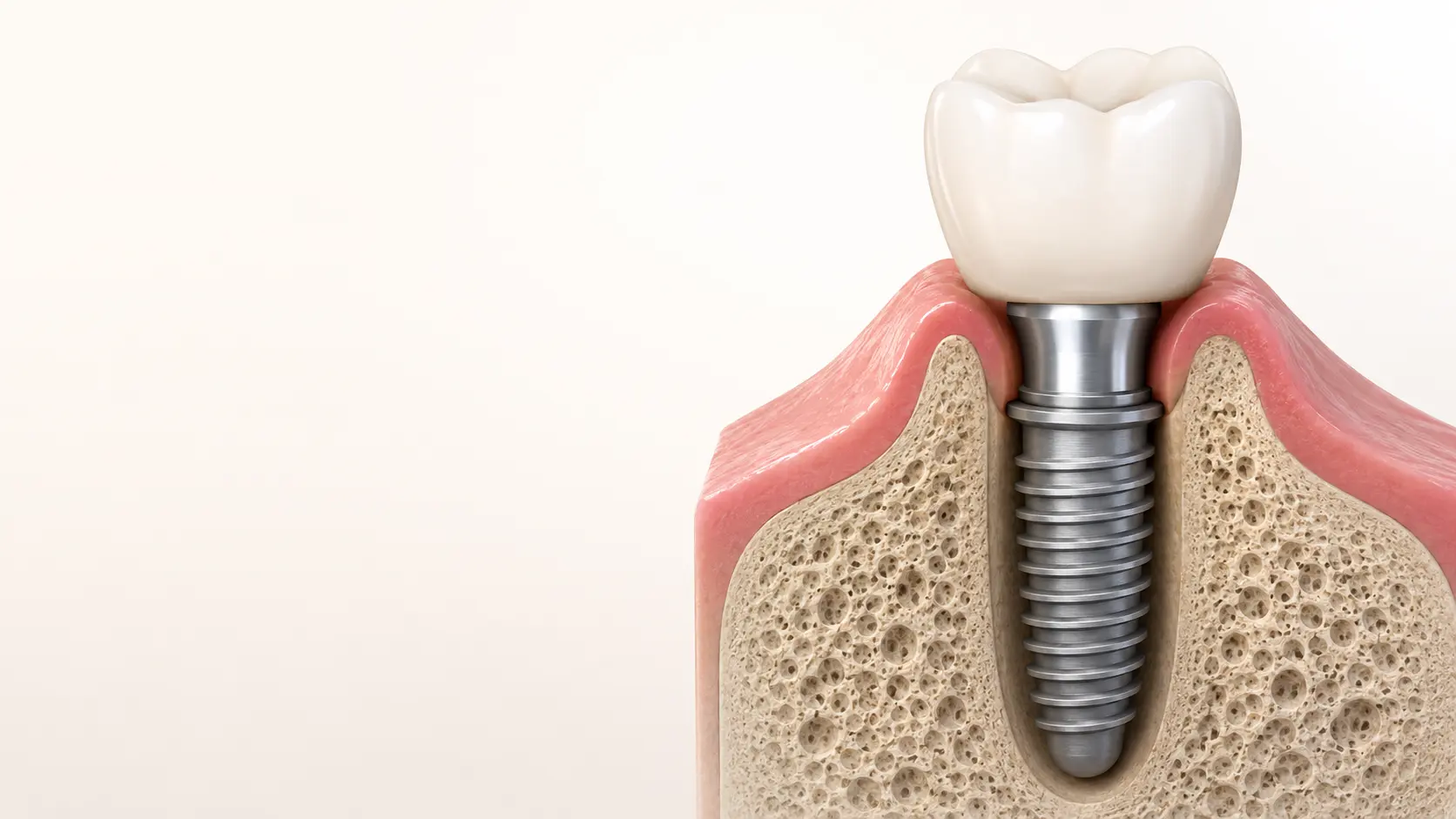
It is positioned in the bone and acts as an artificial root.
PRECISION IMPLANTOLOGY IN ISTANBUL
A dental implant replaces the root of a missing tooth. At Nobel Dent, every treatment begins with a personalised analysis of your teeth, bone volume and occlusion in order to define a solution that is suited to you, functional and natural.
Standard Dental Implant (per unit)
from€500per unitBase price
Included
Not included
Base price shown as a guide: your personalised quote, drawn up after assessment, is the one that applies.
Get a personalized quoteGoals and benefits
A dental implant is an artificial root, most often in titanium, placed in the jawbone to support a crown, a bridge or a denture.
A dental implant is a small component, usually made of titanium, placed in the jawbone to replace the root of a missing tooth. After the healing phase, it serves as a support for a crown, a bridge or a denture, depending on the number of teeth to be replaced.
It is positioned in the bone and acts as an artificial root.
It creates the connection between the implant and the visible restoration.
Custom-made, it restores the appearance and function of the tooth.
Every anatomy is different. The diameter, length, axis and type of implant are determined after the clinical and radiological analysis.
BIOLOGY IN THE SERVICE OF STABILITY
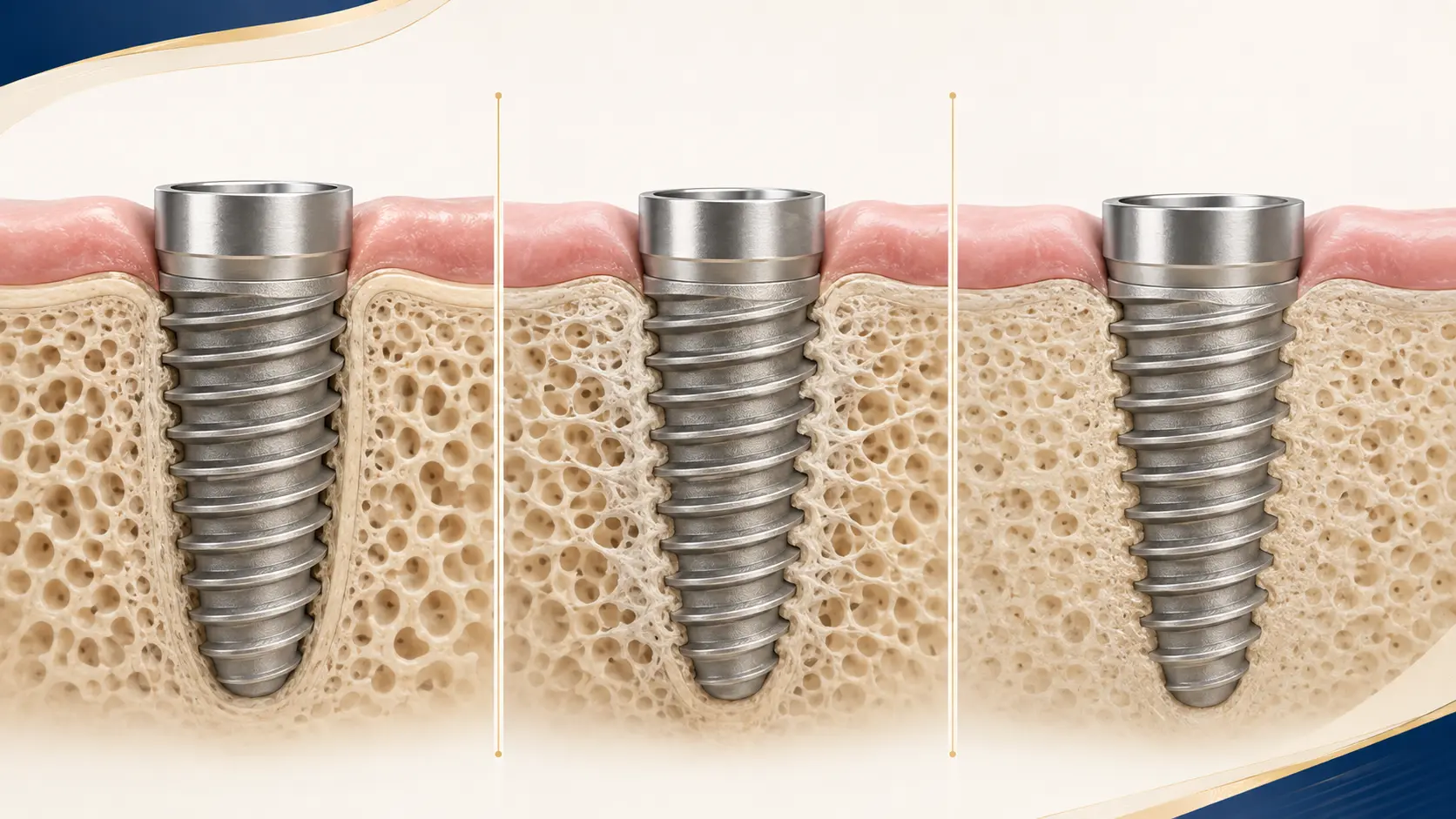
Osseointegration is the process by which living bone establishes direct, stable contact with the implant surface. The initial stability achieved during placement is progressively taken over by biological stability linked to healing and bone remodelling.
At the time of placement, the shape of the implant and the quality of the bone contribute to its mechanical anchorage. This primary stability guides the choice of healing protocol.
During the first weeks, the tissues heal and new bone progressively forms in contact with the implant surface.
The bone continues to organise itself around the implant. The practitioner then checks its stability and decides on the appropriate moment for the final restoration.
Healing time varies depending in particular on the area treated, bone quality and volume, general health, smoking, hygiene and the chosen protocol. There is therefore no single timeline that applies to every patient.
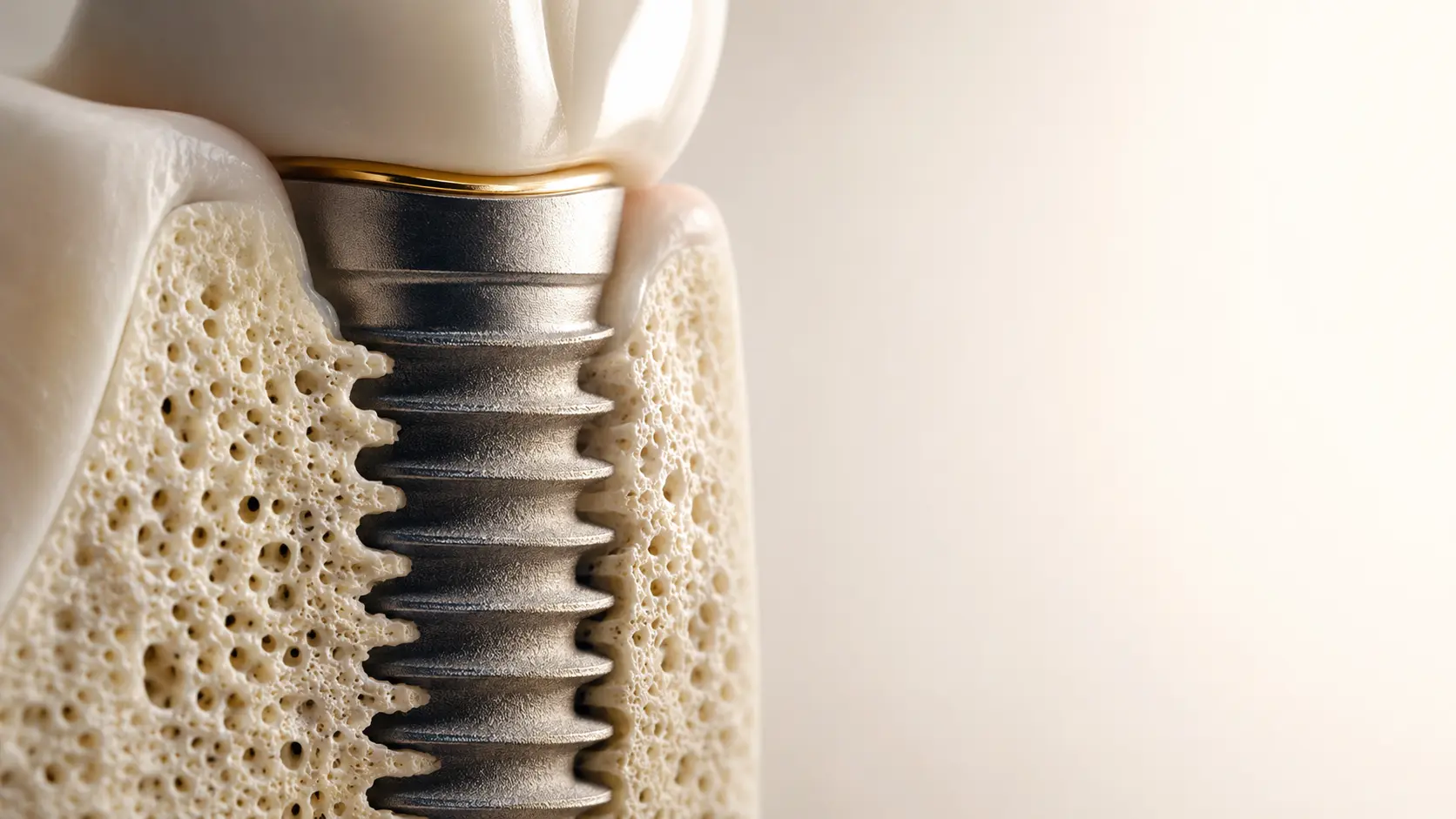
At the microscopic scale, the topography and surface properties of the implant influence the first interactions with the surrounding cells and tissues. The clinical objective is to achieve stable integration while respecting the biology of the bone and soft tissues.
The geometry and thread contribute to the stability achieved during placement.
The texture and surface properties play a part in the biological response around the implant.
The volume, density and vascularisation of the bone remain decisive.
Hygiene, check-ups and maintenance help preserve the tissues around the implant.
PRECISION AND PERSONALISATION
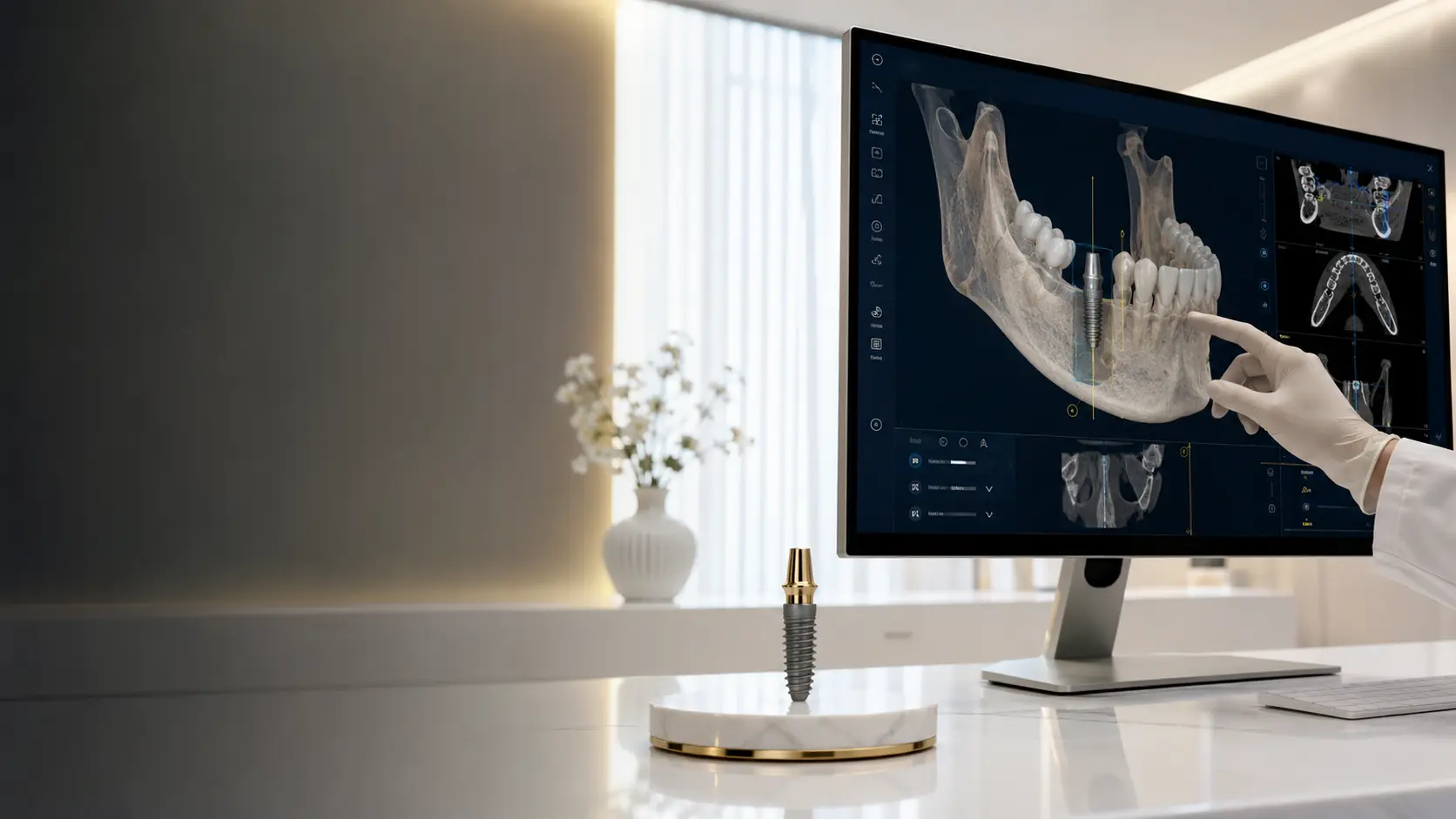
3D imaging makes it possible to study the available bone volume and the anatomical structures to be respected. The surgeon can thus prepare the position, axis and dimensions of the implant in line with the future tooth. When the indication allows it, this planning can be combined with a surgical guide.
Educational animation of the main treatment stages. The actual protocol is adapted to each patient's diagnosis.
Procedure
Examination of the teeth and gums, cone beam scan, analysis of the occlusion and medications, then planning of the implant position. A bone graft or sinus lift can be discussed when the bone volume is insufficient.
The implant is placed under local anaesthesia. Sedation can be considered when indicated after evaluation. The protocol can be conventional or guided depending on the anatomical situation.
A healing period of several months is generally necessary to allow osseointegration. Its duration depends on the bone, the treated area, a possible graft and the stability of the implant.
The abutment connecting the implant to the future tooth can be placed on the day of surgery or at a later stage, depending on the protocol and the healing.
Once the stability of the implant and the health of the tissues are confirmed, a custom crown, bridge or denture is made. Check-ups and professional maintenance remain necessary in the long term.
RECOGNISED MATERIALS AND SYSTEMS
The clinic works with recognised implant manufacturers. The system is selected by the surgeon according to the anatomy, bone quality, planned restoration and clinical protocol. The clinic provides the patient with the traceability information for the device actually placed.
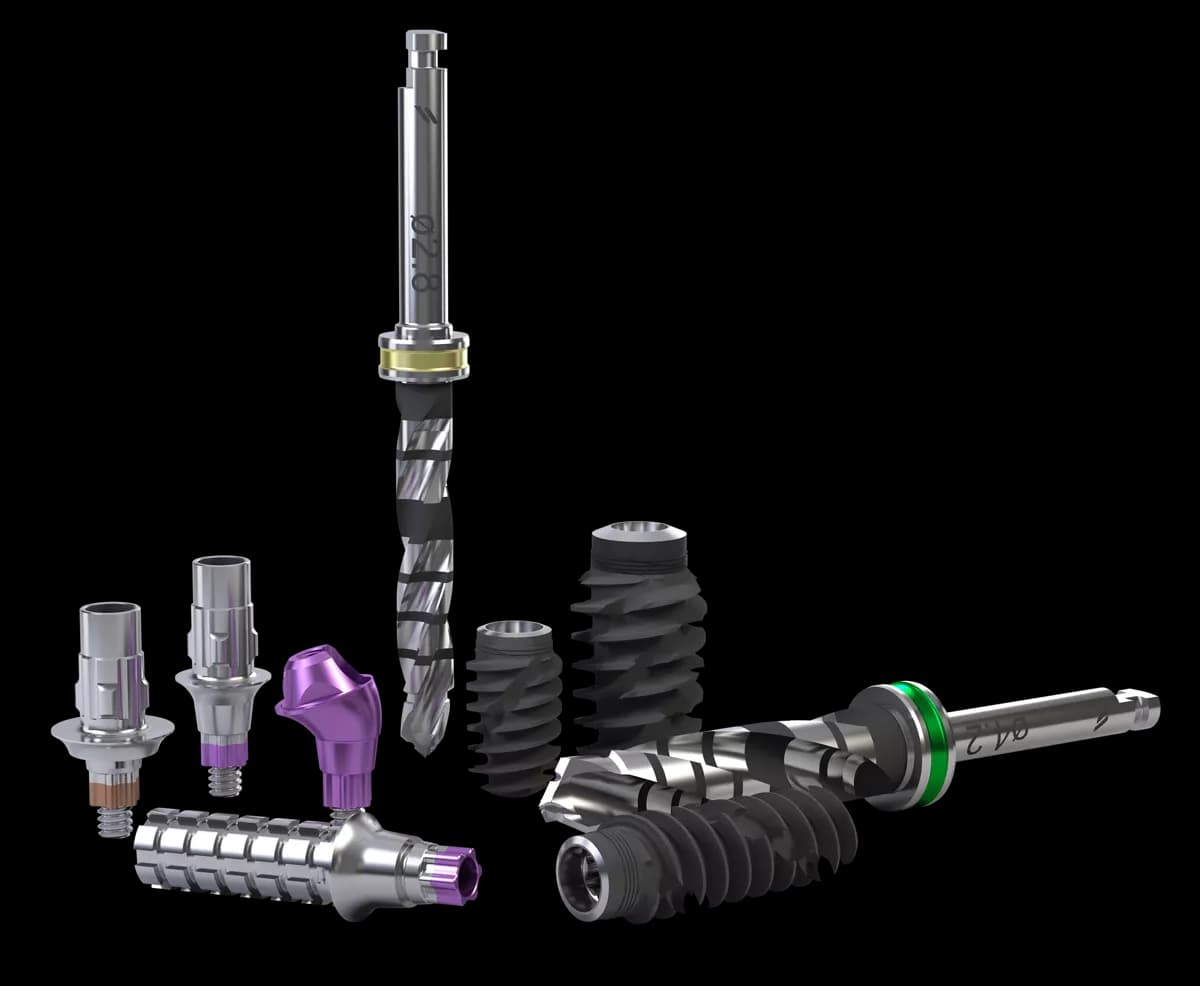
The Straumann BLX system features a design intended for primary stability, the Roxolid® material and the SLActive® surface. These characteristics apply to this specific model.
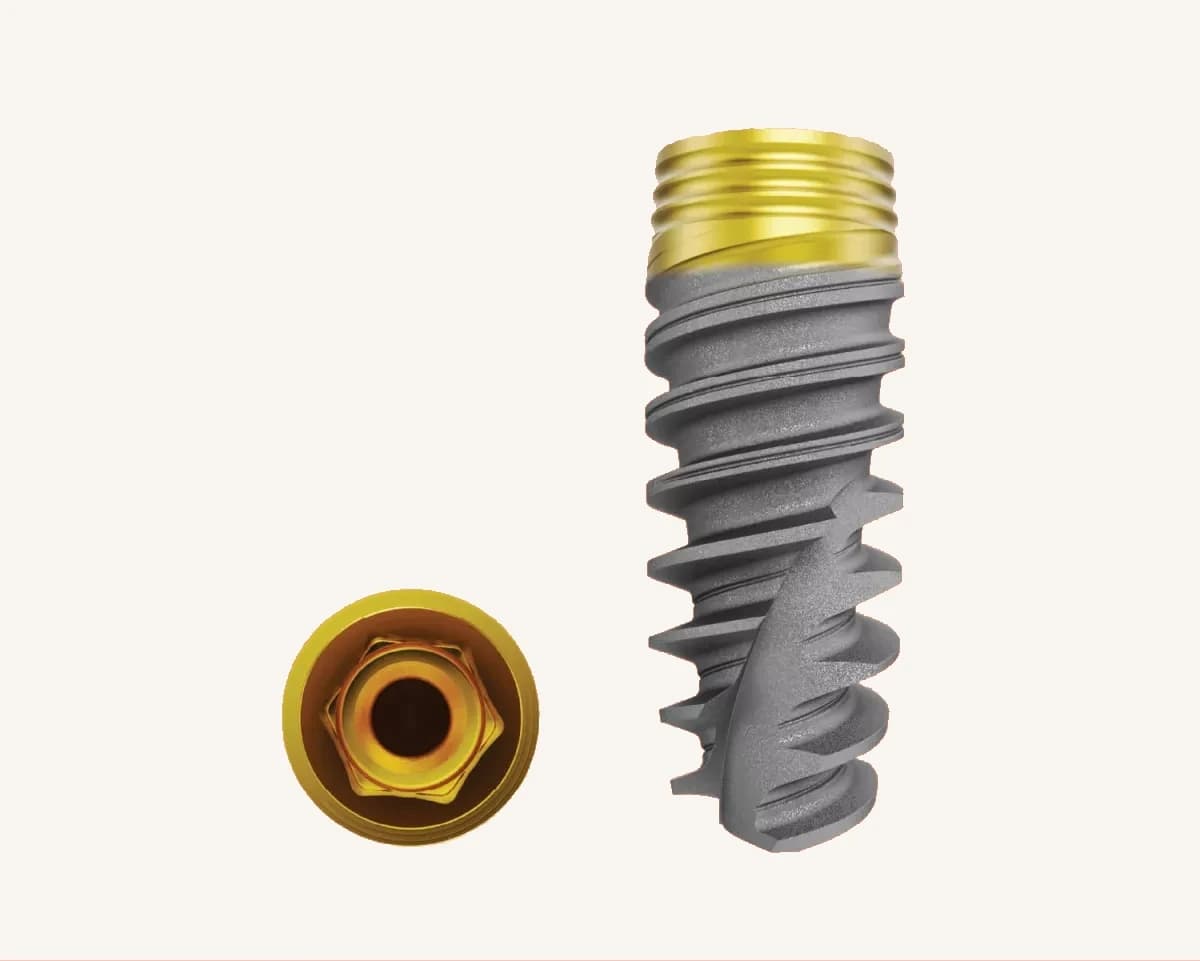
The NobelActive system with TiUltra™ combines a grade 4 titanium body, an internal conical connection and the TiUltra™ surface. These characteristics apply to this specific model.
The Osstem TSIII SA system features a tapered body aimed at primary stability; its SA surface is obtained by sandblasting and acid etching. These characteristics cannot be generalised to the entire Osstem range.
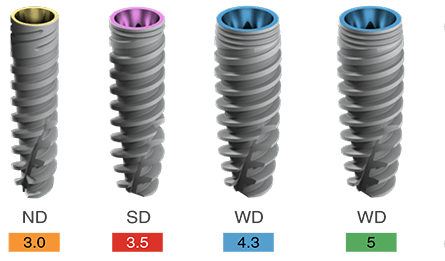

The Medigma Fix Konisch™ system features a conical-hexagonal connection, a self-tapping tapered body and an RBM surface obtained by blasting with resorbable calcium phosphate particles. The exact model and its diameter correspond to the device actually placed.
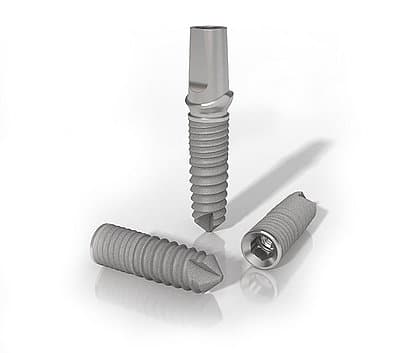

The BEGO Semados® range comprises several families, notably RS/RSX, SC/SCX, RI and S TG, and uses the TiPurePlus® surface. The Semados RI model features a tapered body, a self-condensing thread and platform switching — characteristics specific to this model, not attributable to the entire range.

VenusCon® implants are available in various diameters and lengths, in Ti6Al4V ELI titanium alloy (grade 23), with an RBM surface treated with calcium phosphate.
The brands and models presented are medical devices used according to their indication. No system on its own guarantees the success of a treatment. Results also depend on the diagnosis, the surgical procedure, healing, hygiene and follow-up.
Safety
The procedure is generally performed under local anaesthesia. Sensitivity, swelling or temporary discomfort may appear after surgery. The practitioner gives you instructions and treatment suited to your situation.
The timeline depends on the treated site, the stability of the implant, bone quality and whether a graft is needed. A provisional restoration can sometimes be considered, but immediate loading is not possible in every situation.
Bone augmentation or another technique may be proposed after the 3D analysis. Only the clinical assessment can determine the appropriate solution.
An implant can function durably when it is well indicated, correctly placed and regularly maintained. There is, however, no universal guarantee of longevity: smoking, certain diseases, bruxism, hygiene and follow-up influence the prognosis.
Brushing, interdental cleaning and maintenance visits are essential. The tissues around the implant must be monitored just like those around a natural tooth.
Request your quote
Send us your panoramic X-rays and photos to receive a free assessment and a detailed treatment plan within 24 hours.
Free consultation within 24h
Send us your X-rays or your CT scan, if you have them. Our team will tell you the next steps needed to establish a treatment plan. The final assessment remains subject to the clinical examination on site.
Updated on