
Amount of remaining tooth tissue and presence of cracks
Protecting and restoring a tooth
Dental crowns
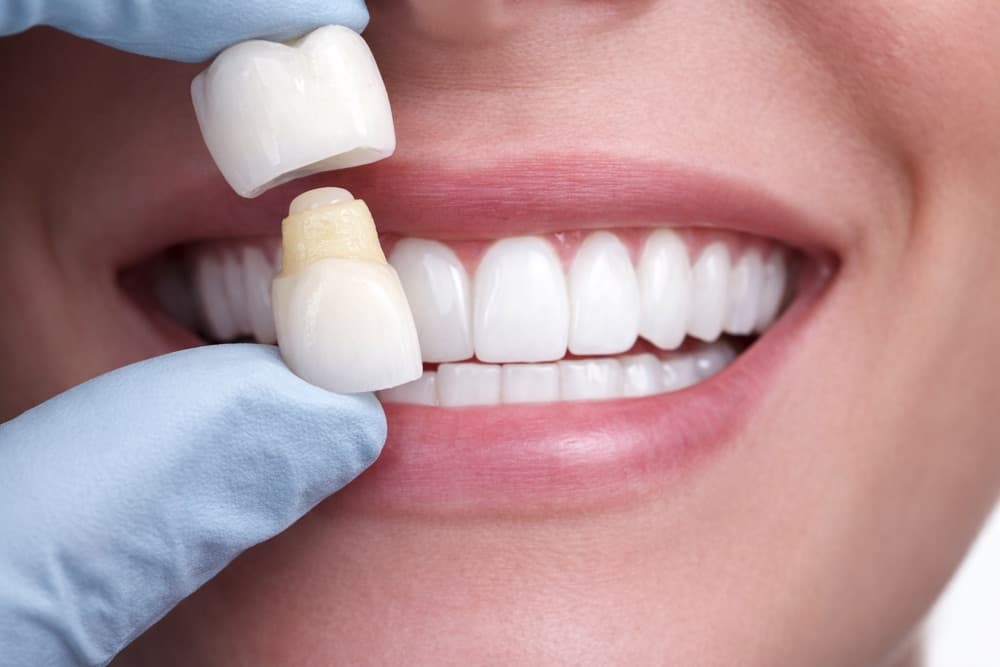
A custom-made restoration that covers a weakened tooth in order to restore its shape, its contacts and its function.
- Duration
- Usually 2 to 3 appointments over several days
- Recovery
- Transient sensitivity or discomfort possible after the preparation
- Results
- Fixed restoration requiring hygiene and regular check-ups
Price and stay
Dental Crown (per unit)
from€200per unitBase price
- Hotel
- Hotel not includedFor treatments over €10,000, one week of hotel accommodation is complimentary on the first stay.
Included
- anaesthesia
- post-operative follow-up
Not included
- flights
- medication
- hotel
- transfers
Base price shown as a guide: your personalised quote, drawn up after assessment, is the one that applies.
Get a personalized quoteGoals and benefits
Very worn or fractured teeth: when is a crown necessary?
A dental crown is a custom-made fixed restoration that covers the visible part of a tooth.
The benefits
- Restoration of the shape and function of a weakened tooth
- Appearance and shade personalised to match the neighbouring teeth
- Can protect a weakened tooth when correctly indicated
- Choice of material adapted to the area and the occlusion
- Ceramic materials available depending on the aesthetic indication
- Can protect a very worn or fractured tooth when composite is no longer enough
- Choice compared with composite and onlay before any full preparation of the tooth
- Manufacturing by a dental prosthetics laboratory
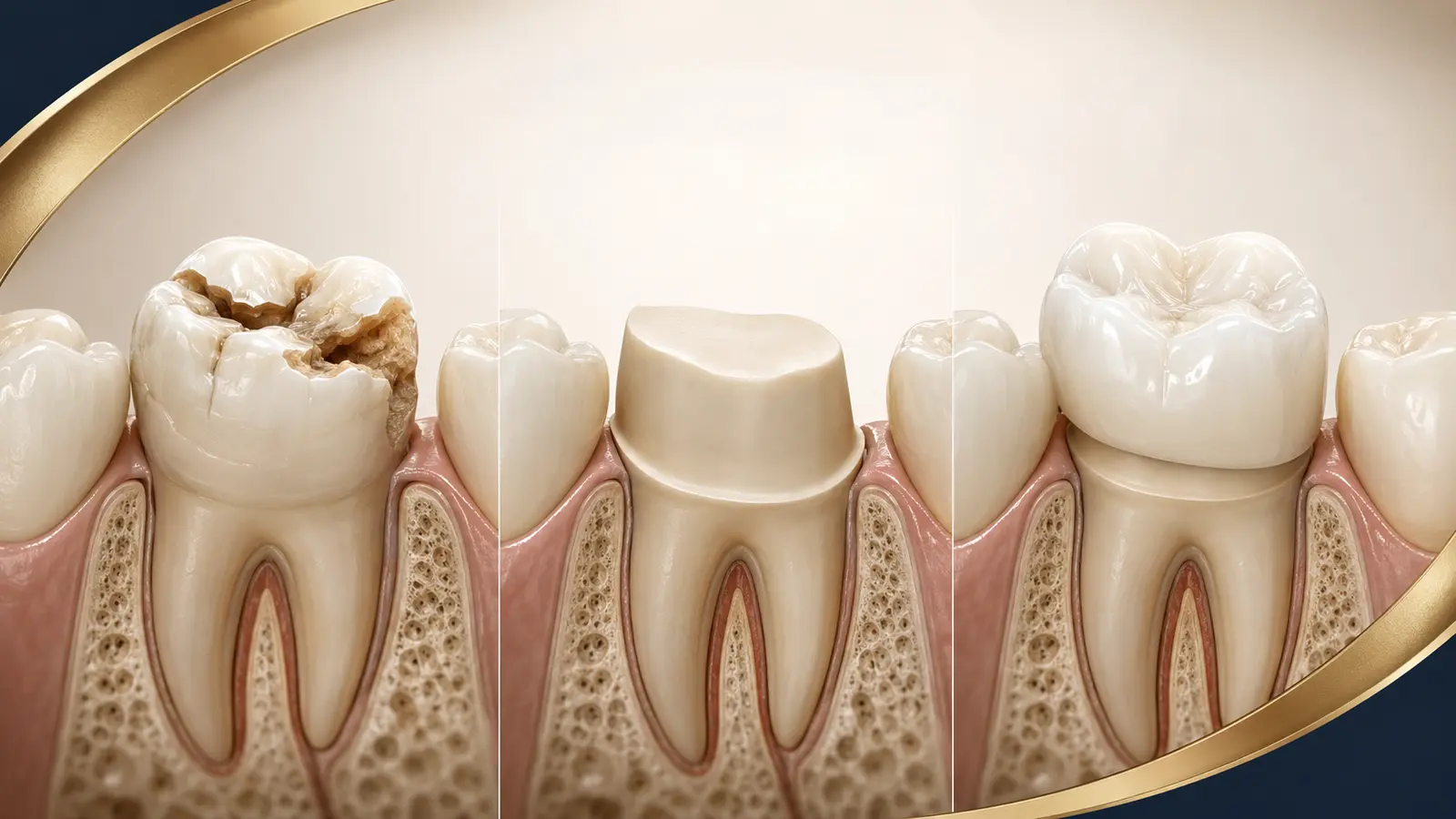
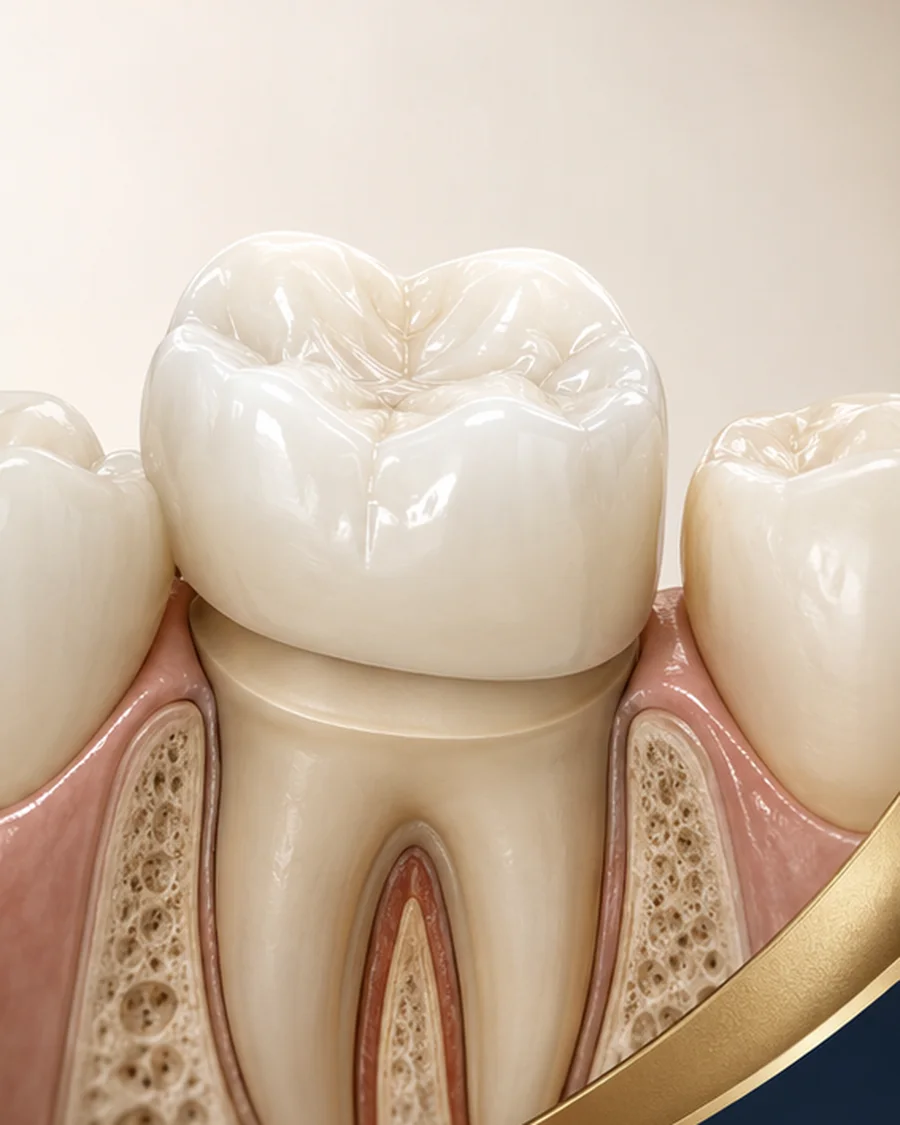
From a weakened tooth to the definitive crown
The tooth is prepared to create the space required for the restoration. The crown must fit in with the neighbouring teeth and respect the gum tissues and the occlusion.
- Protection for a severely weakened tooth
- Shape and contacts rebuilt to measure
- Material chosen according to the area and the loads involved
What the practitioner assesses
Condition of the root, of the root canal treatment and of the gum
Occlusion, bruxism, aesthetics and available space
Treatment video
Educational animation of the main treatment stages. The actual protocol is adapted to each patient's diagnosis.
Procedure
The treatment process
Diagnosis of the tooth and choice of treatment
Clinical and radiographic examination, search for cracks or cavities, check of the root, the gums and the occlusion. The practitioner compares the crown with the possible conservative alternatives.
Preparation and impression of the tooth
Under local anaesthesia when necessary, the tooth is prepared while preserving as much healthy tissue as possible. An optical or conventional impression and a shade record are then taken.
Provisional protection of the tooth
A provisional crown can be placed to protect the prepared tooth, maintain aesthetics and limit movements while the final restoration is being manufactured.
Custom manufacturing of the crown
The laboratory designs the restoration from the impression and the shade information. The shape, thickness and material are adapted to the tooth, the chewing and the aesthetic project.
Try-in and final cementation
The crown is tried in and adjusted. The practitioner checks the margins, the contacts, the occlusion and the aesthetics before cementation. Persistent sensitivity or discomfort when chewing must be reported.
Technology and materials
Digital impression and computer-aided design
Digital scanning makes it easier to communicate with the laboratory and to check the available space. It does not replace the assessment of the margins and of the occlusion in the mouth.
Safety
Contraindications
- Cavities, infection or active gum disease to treat before the crown
- Tooth too damaged to restore, or a crack extending below the gum
- Insufficient root or bone support requiring a different strategy
Frequently asked questions
Is a crown always necessary after a root canal treatment?
Not always. The decision depends on the tooth, on the loss of tooth structure and on the loads involved. A partial restoration may sometimes be sufficient.
How long does a crown last?
This varies according to hygiene, the tissues, the occlusion, the material and the check-ups. No universal lifespan can be guaranteed.
Related treatments
Request your quote
Ready to transform your smile?
Send us your panoramic X-rays and photos to receive a free assessment and a detailed treatment plan within 24 hours.
Free consultation within 24h
Updated on